2026-09-11 10:08:15
Semiconductor reliability test standards distinguish tests by the stress applied and whether the device is biased, operating or unpowered. This guide compares six JEDEC methods relevant to environmental and life testing, connecting those differences to chamber selection and supporting electrical functions.
An environmental test chamber—or, for temperature and humidity applications, a climatic test chamber—provides the environmental conditions; the selected method determines what else the setup needs.
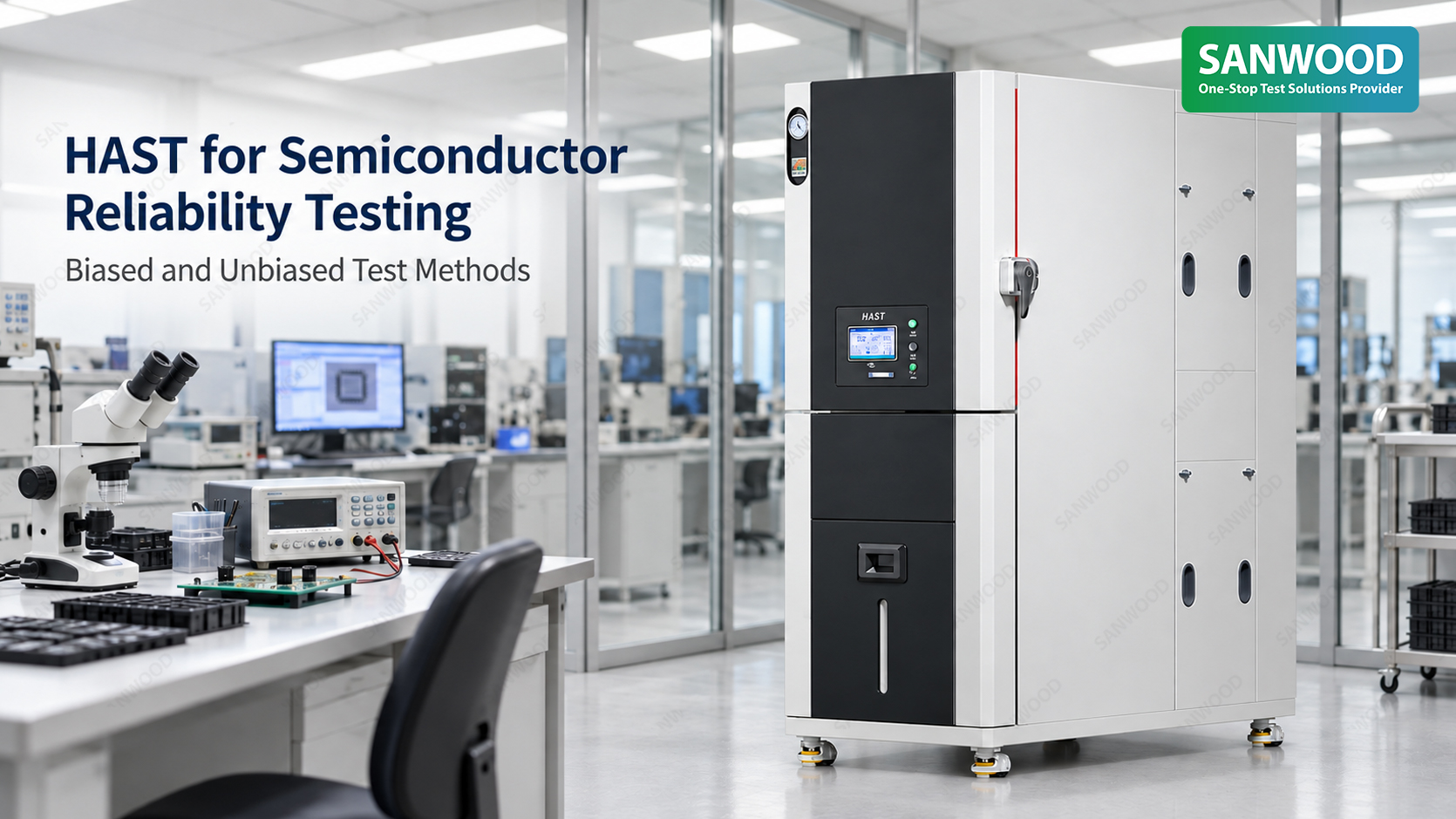
JESD47 provides a stress-test-driven qualification framework for integrated circuits. The JESD22 series contains individual test methods. The qualification plan identifies which methods apply to the device and package, along with the required revisions and acceptance criteria; it does not automatically require every JESD22 test.
| JEDEC reference | Test and purpose | Device state | Category to evaluate |
| JESD22-A101 | THB Moisture reliability under temperature and humidity stress | Electrical bias applied | Temperature-humidity chamber with bias arrangement |
| JESD22-A110 | Biased HAST Accelerated moisture stress | Electrical bias applied | HAST chamber with bias arrangement |
| JESD22-A118 | Unbiased HAST Accelerated moisture stress | No bias during exposure | HAST chamber configured for the unbiased method |
| JESD22-A104 | Temperature cycling Repeated high and low temperature exposure | Powered operation not implied | Temperature-cycling chamber |
| JESD22-A108 | HTOL Life testing at elevated temperature | Powered operation | Operating-life system with thermal and electrical functions |
| JESD22-A103 | HTSL High-temperature storage | Device not operated during exposure | High-temperature storage chamber or oven |
Common test names are used for navigation. The categories identify setups to evaluate, not verified capabilities of a particular product.
THB and HAST Use Different Moisture Environments
Temperature Humidity Bias (THB) uses a temperature-humidity environment at atmospheric pressure. HAST uses a pressurized, high-temperature humidity environment and requires a purpose-built chamber. Raising the setpoint of a conventional temperature-humidity chamber does not reproduce HAST conditions.
The device package and qualification requirements determine the moisture evaluation to use. SANWOOD's HAST chambers and temperature-humidity test chambers are separate product categories for these different test environments. For a project inquiry, identify the selected method first, then specify the bias connections and electrical functions required alongside the chamber.
Electrical bias, device operation and electrical measurement are separate requirements. For THB or biased HAST, establish how the samples will connect to the bias supply and which electrical functions the laboratory will provide. Unbiased HAST applies no bias during exposure, but electrical evaluation before or after exposure may still be required.
Chamber records document the environment. Results for the device under test (DUT) need their own measurement source and acceptance criteria.
Temperature cycling repeatedly exposes samples to high and low temperatures. The intended sample load and arrangement affect how the devices respond during dwell periods and transitions. A programmed chamber-air profile alone does not establish that the samples have reached the required temperatures.
Evaluate the required thermal sequence at the samples, including dwell and transition requirements. JESD22-A104 temperature cycling should not be confused with power cycling.
High Temperature Operating Life (HTOL) evaluates devices under operating conditions at elevated temperature. High Temperature Storage Life (HTSL) evaluates high-temperature storage without operating the devices during exposure.
A storage chamber supplies the thermal environment for HTSL. HTOL also needs the electrical functions that operate the devices during stress, so those functions belong in the system scope. A chamber’s temperature range alone does not establish complete HTOL capability. JESD22-A108 is cited here for HTOL; its full scope extends beyond this summary.
Not necessarily. The qualification plan determines the methods required for the device and package. A supplier's list of referenced standards is not a qualification checklist.
Only where the applicable qualification requirements permit the choice or substitution for the device and package. Their shared moisture-related purpose does not establish a universal replacement rule or equivalent test duration.
Use the revision specified by the approved qualification plan, together with applicable customer requirements. The responsible qualification team should resolve any conflict or proposed revision change before testing.
Send SANWOOD an RFQ with your device and package type, test standard and revision, sample quantity, and bias or operating requirements. Include the relevant requirements from your qualification plan so we can discuss the chamber configuration and clarify which supporting electrical functions are needed and who will provide them.
JESD47 — Stress-test-driven qualification of integrated circuits.
JESD22-A101 — Steady-state temperature humidity bias life test.
JESD22-A110 — Highly accelerated temperature and humidity stress test with bias.
JESD22-A118 — Unbiased highly accelerated temperature and humidity stress test.
JESD22-A104 — Temperature cycling.
JESD22-A108 — Temperature, bias and operating life.
JESD22-A103 — High-temperature storage life.
Descriptions identify the subject of each standard; consult the editions required by the approved qualification plan for procedures and acceptance requirements.
Sanwood is not just a company; it is a commitment to delivering high-quality products that stand the test of time.

 English
 中 文


 info@sanwood.com