Q1: Why should an expanding semiconductor manufacturing facility transition to a high-capacity double-door dynamic aging system rather than deploying multiple single-door chambers?
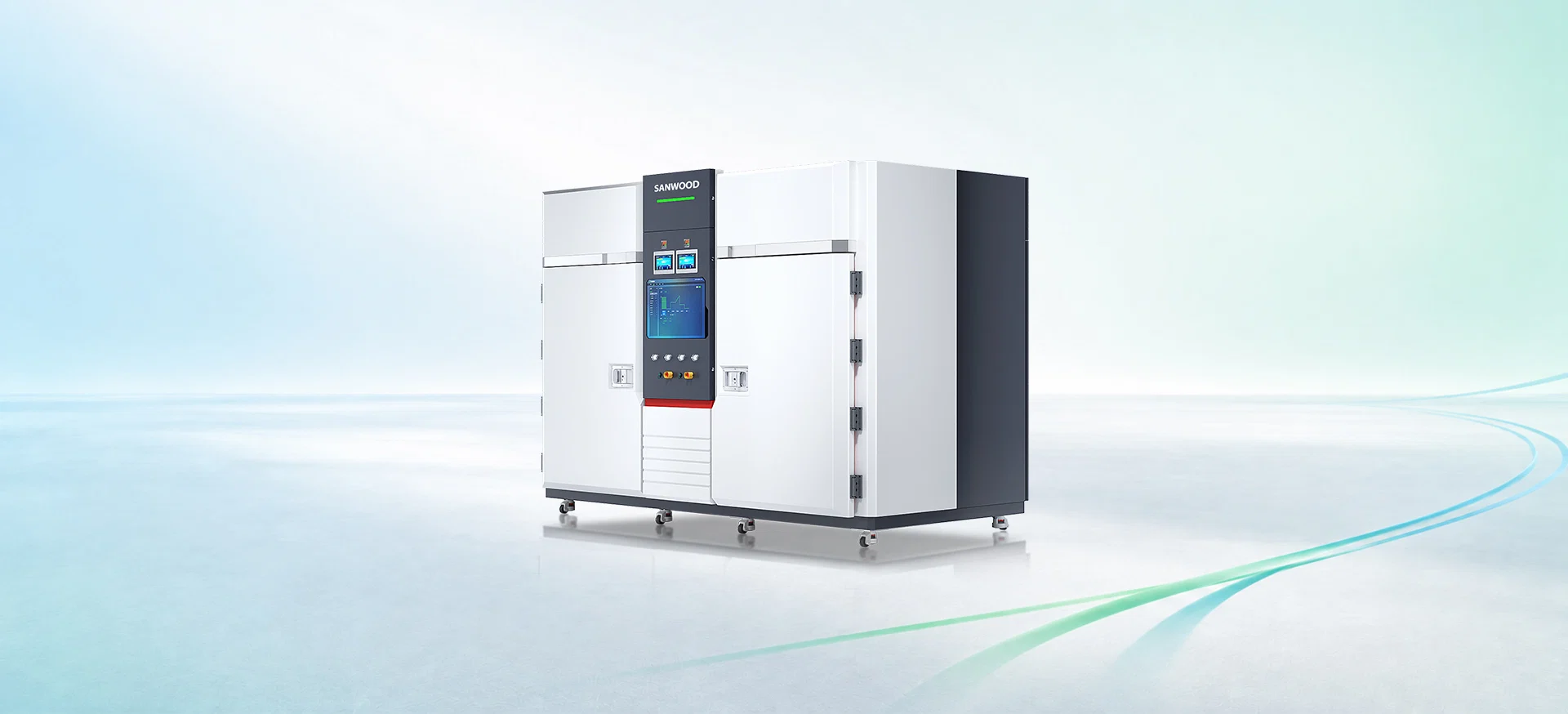
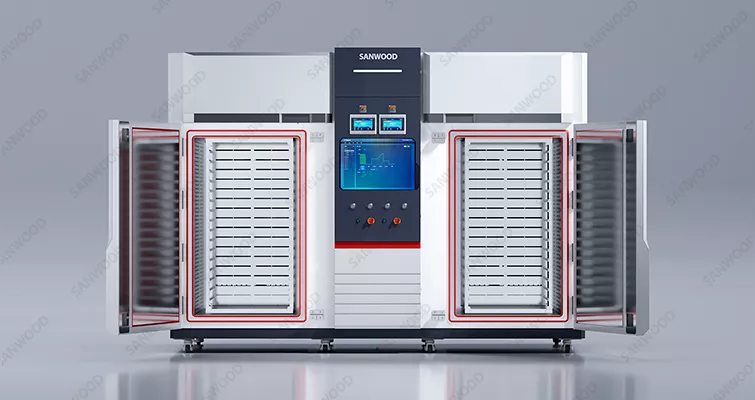
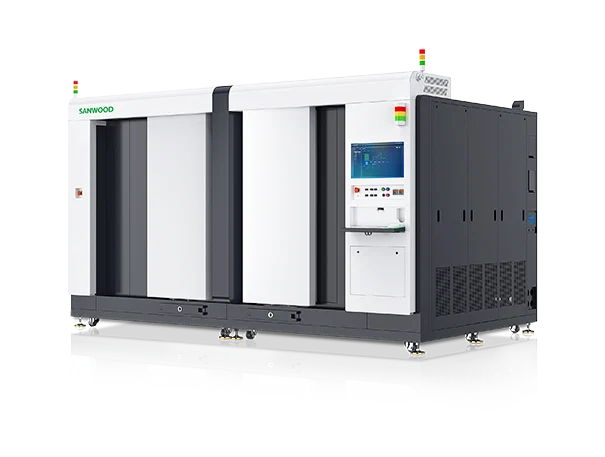
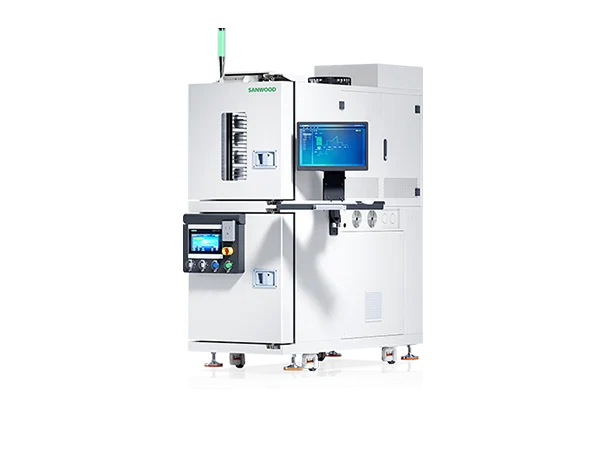
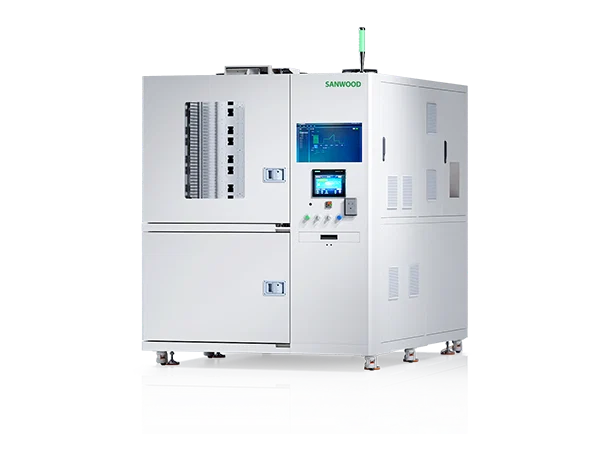
A: Transitioning to a double-door system maximizes cleanroom floor space efficiency while significantly optimizing thermal management ROI. Running multiple isolated chambers creates multiple individual wall heat losses, redundant power connections, and separate control lines. Sanwood's double-door environmental test chamber consolidates dual testing racks within a unified, footprint-optimized enclosure. It shares a synchronized high-efficiency cooling engine and a centralized ALPG master controller. This allows production engineers to execute identical HTOL batch profiles across double the DUT volume concurrently, reducing per-chip testing costs, eliminating inter-chamber calibration variances, and preserving valuable laboratory square footage.
Q2: How does the symmetrical cross-flow fluidics architecture in this double-door climatic test chamber eliminate temperature gradients caused by dual-rack card blocking?
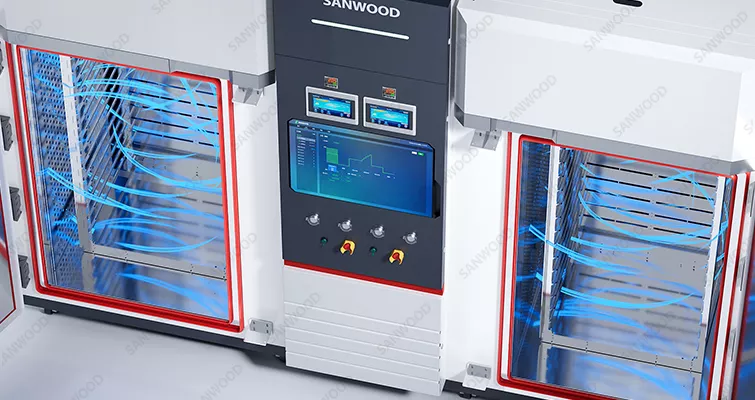
A: Packing a chamber with dual rows of dense testing card cages creates a massive internal airflow obstruction. Traditional single-flow wind tunnels stall when hitting the first rack, causing a severe thermal drop and creating dangerous heat pockets behind the second rack. Our specialized climatic test chamber layout resolves this by implementing a symmetrical cross-flow balanced fluidic network. High-static centrifugal fans on both the left and right interior walls drive counter-rotational horizontal laminar streams across the slots simultaneously. These dual opposing air currents meet at a balanced, high-volume central suction extraction column positioned perfectly between the two racks. This forces identical wind velocity vectors to penetrate every card cage layer evenly from both outer edges inward, locking the spatial temperature uniformity strictly below ±1.5°C even when both racks are fully powereds.
Q3: What thermal-bias engineering measures manage the sudden multi-kilowatt power spikes when dual-rack AI accelerators shift into high-throughput IOPS modes?
A: Dual-rack configurations amplify active DUT thermal loads into the multi-kilowatt range. When hundreds of high-performance logic ICs trigger synchronized high-frequency processing vectors, they act as an aggressive internal heating element, which can easily defeat standard PID thermal controllers and trigger a destructive temperature overshoot. Our high-capacity environmental test chamber counters this through a proprietary feed-forward power balance algorithm. The system's processing core continuously tracks the active current consumption running through both rack power distribution buses. The microsecond an IOPS burst or voltage shift is logged, the controller bypasses traditional slow air thermal latency, immediately opening electronic expansion valves to inject proportional multi-stage refrigeration capacity right into the internal workspace, neutralizing the multi-kilowatt heat spike before the temperature can drift outside the testing specification.
Q4: How does the structural seal design of this double-door climatic test chamber guarantee long-term zero air leakage across a wide 150°C operating span with an extended door-seal perimeter?
A: A double-door configuration inherently doubles the perimeter of the physical sealing joint, creating a vulnerable zone where thermal expansion mismatch can warp structural sheet metal and trigger severe vacuum or air leakage. To lock down the environment, this specialized climatic test chamber utilizes a heavy-duty, dual-compression hollow-core silicone gasket profile specifically treated to resist degradation at continuous 150°C exposures. The frame features an interlocking central mullion seal combined with an external structural carbon-steel reinforcement matrix. Heavy-duty, adjustable multi-point compression cam hinges apply consistent, distributed mechanical seating pressure along the entire extended door boundary, preventing any structural warp, blocking ambient humidity ingress, and ensuring zero thermal or pneumatic leakage across thousands of continuous testing cycles.

 English
 中 文
中 文


 info@sanwood.com