Q1: Can this benchtop temperature humidity chamber realistically deliver the same spatial uniformity as larger, industrial-sized environmental test chambers?
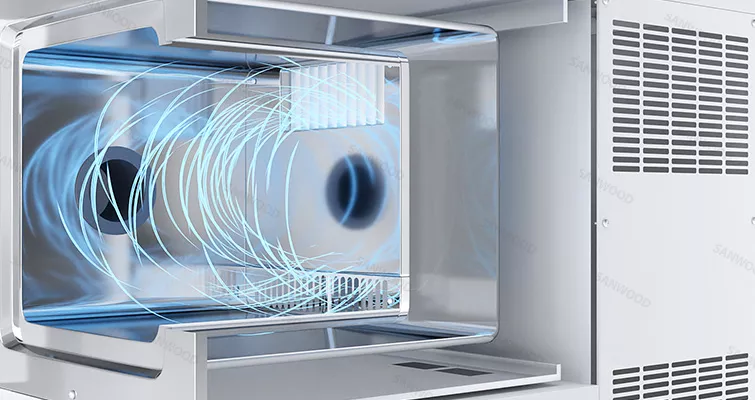
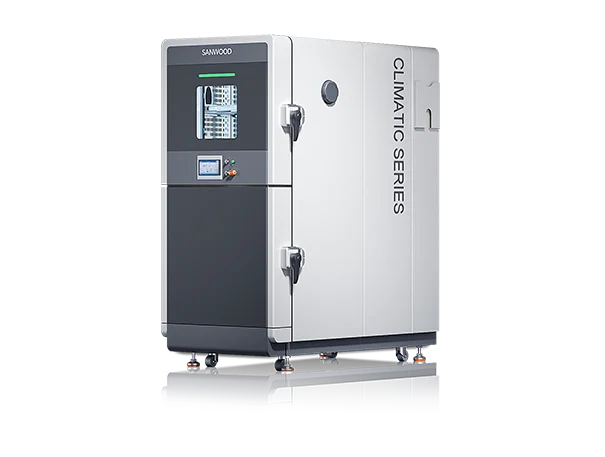
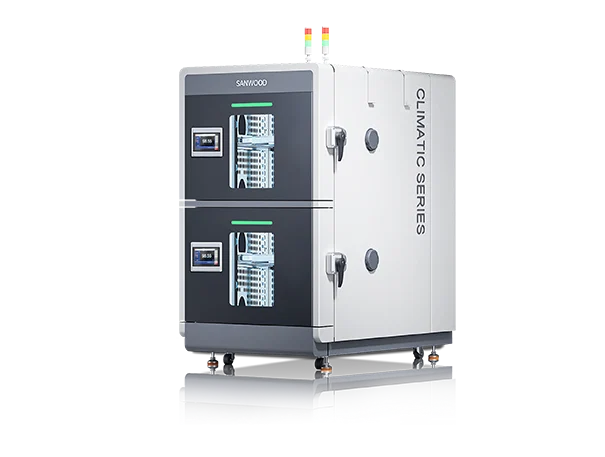
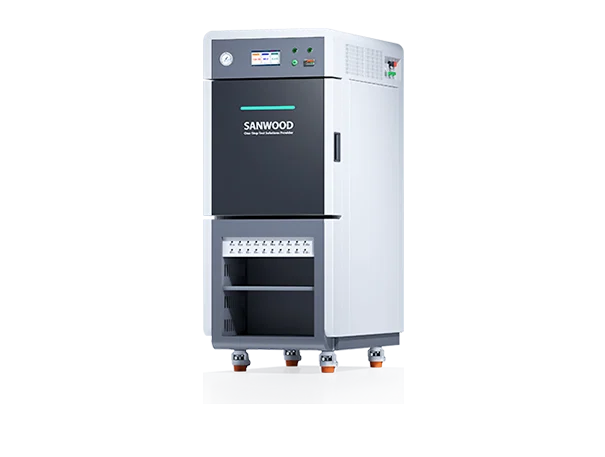
A: Smaller geometric chambers often suffer from airflow turbulence and dead zones when loaded. Sanwood’s standard environmental test chamber overcomes this space limitation by embedding a tailored rear-wall forced air delivery plenum driven by a low-vibration centrifugal motor. This architecture profiles the airflow to sweep horizontally across the workspace with balanced static pressure, preventing the climate from short-circuiting around the boundaries. By actively scrubbing the thermal boundary layers surrounding tiny components, it holds spatial temperature uniformity strictly within a tight ±0.5°C tolerance window at continuous hold.
Q2: What facilities infra retrofits or dynamic voltage supplies are mandatory to deploy this standard chamber model into an R&D office office environment?
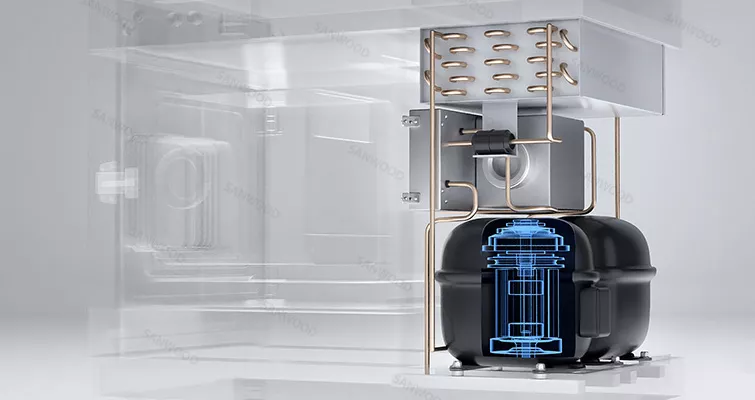
A: Zero infrastructure upgrades are required. Unlike power-hungry industrial equipment that demands dedicated three-phase utility drops and water pipelines, this compact climatic test chamber is engineered for standard office and laboratory ecosystems. It draws power from a standard, single-phase universal wall socket and incorporates a built-in recycled water reservoir paired with a high-purity filter block. This design cuts the need for fixed external drain lines, allowing testing teams to unpack, fill the tank, plug it into standard utilities, and run rigorous QA cycles instantly.
Q3: How does the standard humidification network control condensation and avoid water pooling on delicate active electronics during rapid cycle transitions?
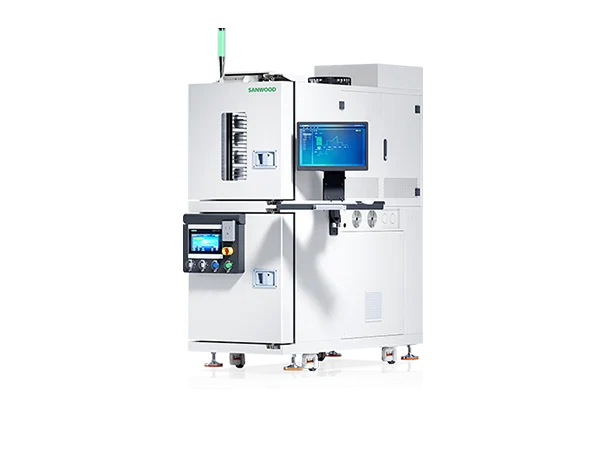
A: Standard humidification can cause condensation when warm, humid air hits a cold component surface during cycle shifts. Our advanced environmental test chamber handles this through a responsive, electronic vapor-injection network managed by real-time micro-climate prediction algorithms. Before the chamber shifts into a high-humidity phase, the controller pre-heats the internal air vectors dynamically while adjusting the dew point matrix smoothly. By tracking the exact thermal inertia of the components, it prevents relative humidity from spiking prematurely, successfully preventing water film tracking and short-circuit failure on live electronics.

 English
 中 文
中 文



 info@sanwood.com