Q1: Why does an enterprise storage verification program require a specialized high live-load environmental test chamber instead of a standard thermal oven?
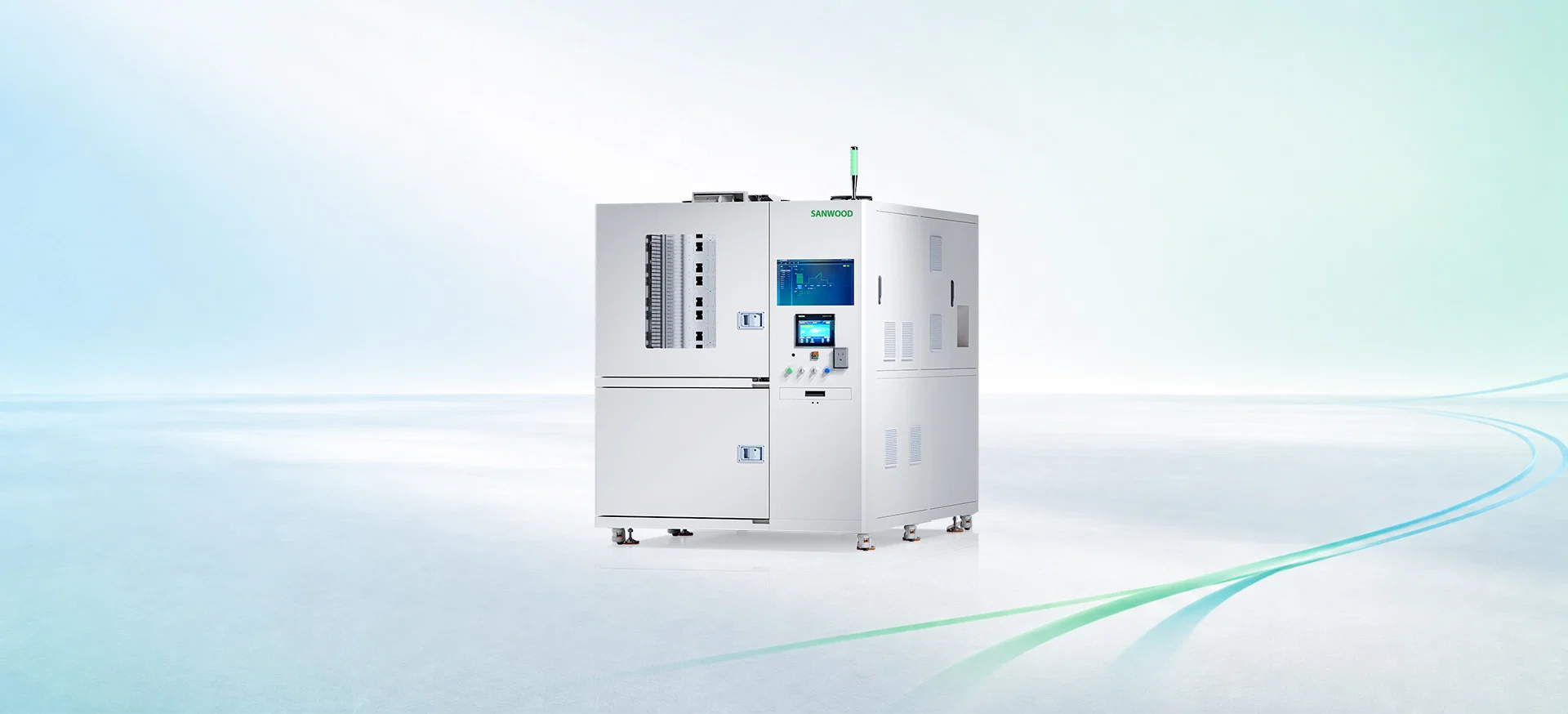
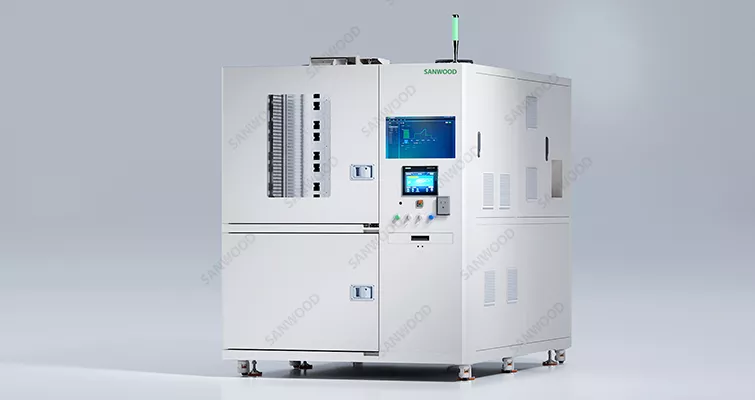
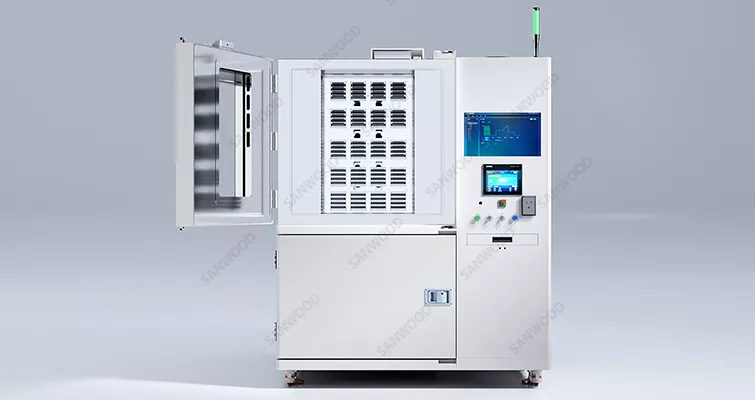
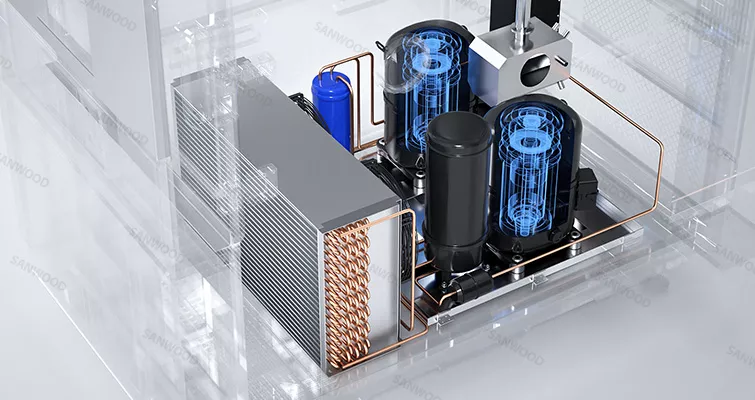
A: Standard industrial ovens lack active heat compensation systems. When hundreds of NVMe drives execute high-throughput IOPS concurrently, they generate massive operational heat that triggers immediate temperature runaway. Sanwood's specialized environmental test chamber is engineered with a synchronized refrigerant bypass topology that actively neutralizes up to 8 kW of DUT power, ensuring the actual ramp profile matches your target test specification perfectly.
Q2: How does this climatic test chamber prevent condensation and frost on high-frequency PCIe slots during rapid sub-zero cycling?
A: Condensation causes fatal electrical short circuits on active backplanes. Our climatic test chamber seals the environment by interfacing an automated ultra-low dew point dry air/nitrogen purge loop. By aggressively suppressing internal relative humidity below 3% before plunging into sub-zero zones, it ensures the entire interface board and your high-value Gen5 SSD test units remain completely frost-free.
Q3: How does the system ensure signal integrity for PCIe Gen5 high-frequency signals under continuous thermal expansion stress?
A: Temperature swings cause physical expansion and contraction in testing boards, leading to trace micro-cracks and impedance drift. Sanwood resolves this by using custom, military-grade high-Tg Teflon and polyimide composite substrates for all inner host backplanes. Combined with localized cross-talk shield traces, the impedance remains locked within the standard 85-ohm/100-ohm tolerance windows across the entire -40°C to +150°C operating span, preventing false-positive data link dropouts.
Q4: Can this rapid temperature cycling chamber run different testing slot voltages simultaneously for multi-variant drive benchmarking?
A: Yes. Designed for versatile R&D laboratory workflows, the chamber's power distribution rack houses independently programmable, multi-channel DC power modules. Engineers can assign distinct voltage profiles (e.g., 3.3V, 5V, 12V with microsecond-accurate trim margins) to different drive trays concurrently. This allows you to execute parallel, asynchronous margin testing and voltage-shmoo benchmarking within a single thermal profile run.

 English
 中 文
中 文


 info@sanwood.com