Website: Sanwood
Language:
English

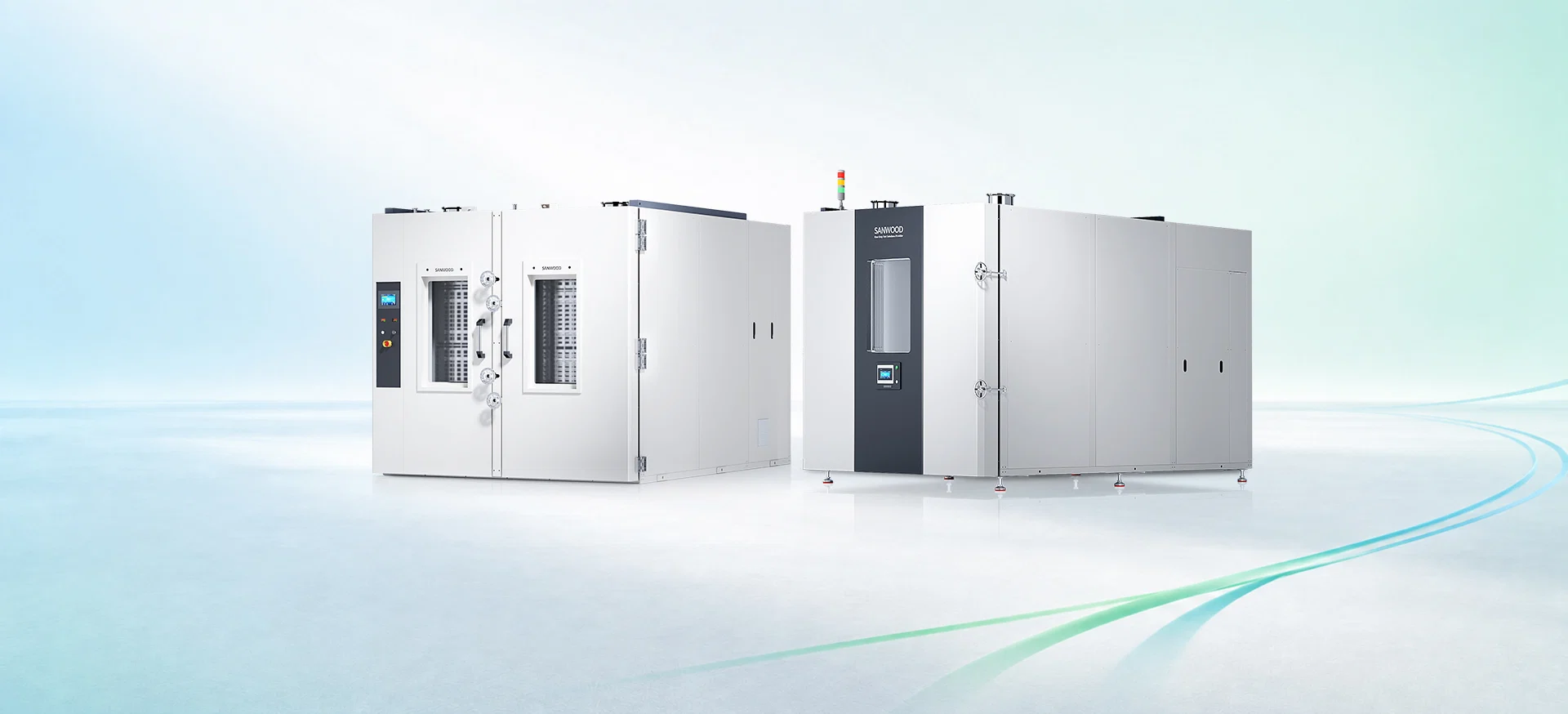
Altitude Test Chambers

Air density drops exponentially with altitude, fundamentally altering the fluid mechanics of forced-air cooling and compromising dielectric insulation boundaries.

Sanwood low-pressure simulation chambers tackle this specific hypobaric challenge by decoupling precise temperature loops from vacuum depressurization down to fractional kilopascal levels. This independent control allows test engineers to evaluate hardware performance where traditional fan affinity laws fail and heat sink thermal resistance plummets due to reduced molecular mass flow.

By replicating unpressurized flight transit and high-altitude deployment profiles, the instrumentation isolates catastrophic arc tracking, structural seal swelling, and localized thermal choking, delivering definitive survival data that satisfies MIL-STD-810H Method 500.6 and RTCA DO-160G compliance mandates.

Altitude Test Chambers

Air density drops exponentially with altitude, fundamentally altering the fluid mechanics of forced-air cooling and compromising dielectric insulation boundaries.

Sanwood low-pressure simulation chambers tackle this specific hypobaric challenge by decoupling precise temperature loops from vacuum depressurization down to fractional kilopascal levels. This independent control allows test engineers to evaluate hardware performance where traditional fan affinity laws fail and heat sink thermal resistance plummets due to reduced molecular mass flow.

By replicating unpressurized flight transit and high-altitude deployment profiles, the instrumentation isolates catastrophic arc tracking, structural seal swelling, and localized thermal choking, delivering definitive survival data that satisfies MIL-STD-810H Method 500.6 and RTCA DO-160G compliance mandates.

Read more
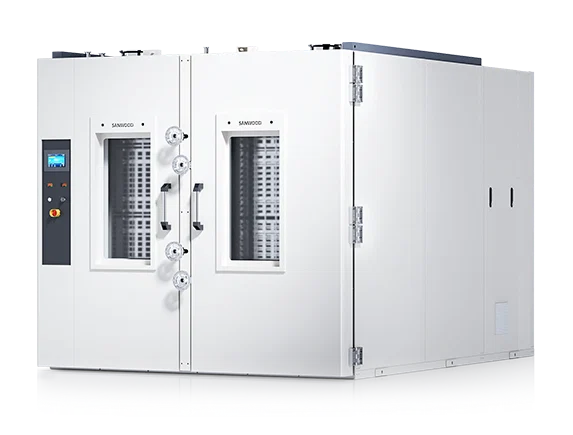
Walk-In Low Pressure Simulation Chamber for AI Server Reliability Testing

Walk-In Low Pressure Simulation Chamber for AI Server Reliability Testing

Validating next-gen AI cluster infrastructure at high altitudes presents a severe thermodynamic challenge. As atmospheric pressure drops, air density plummets, reducing the heat-carrying mass capacity of forced-air cooling loops by up to 30% to 50%. This severe reduction in convective cooling efficiency triggers catastrophic thermal throttling, fan speed algorithm anomalies, and localized GPU hotspots in high-density AI servers dissipating tens of kilowatts per rack. Furthermore, thin air significantly lowers the dielectric breakdown voltage thresholds, drastically increasing high-voltage arcing risks on dense server backplanes.

Sanwood's W...

Learn more

Want to know more? Talk to an expert! Leave a message and a specialist will get back to you.

Information on how we processyour personal data.