Q1: How does this thermal cycling chamber manage extreme overshoots when a full-rack GPU deployment shifts into peak processing modes?
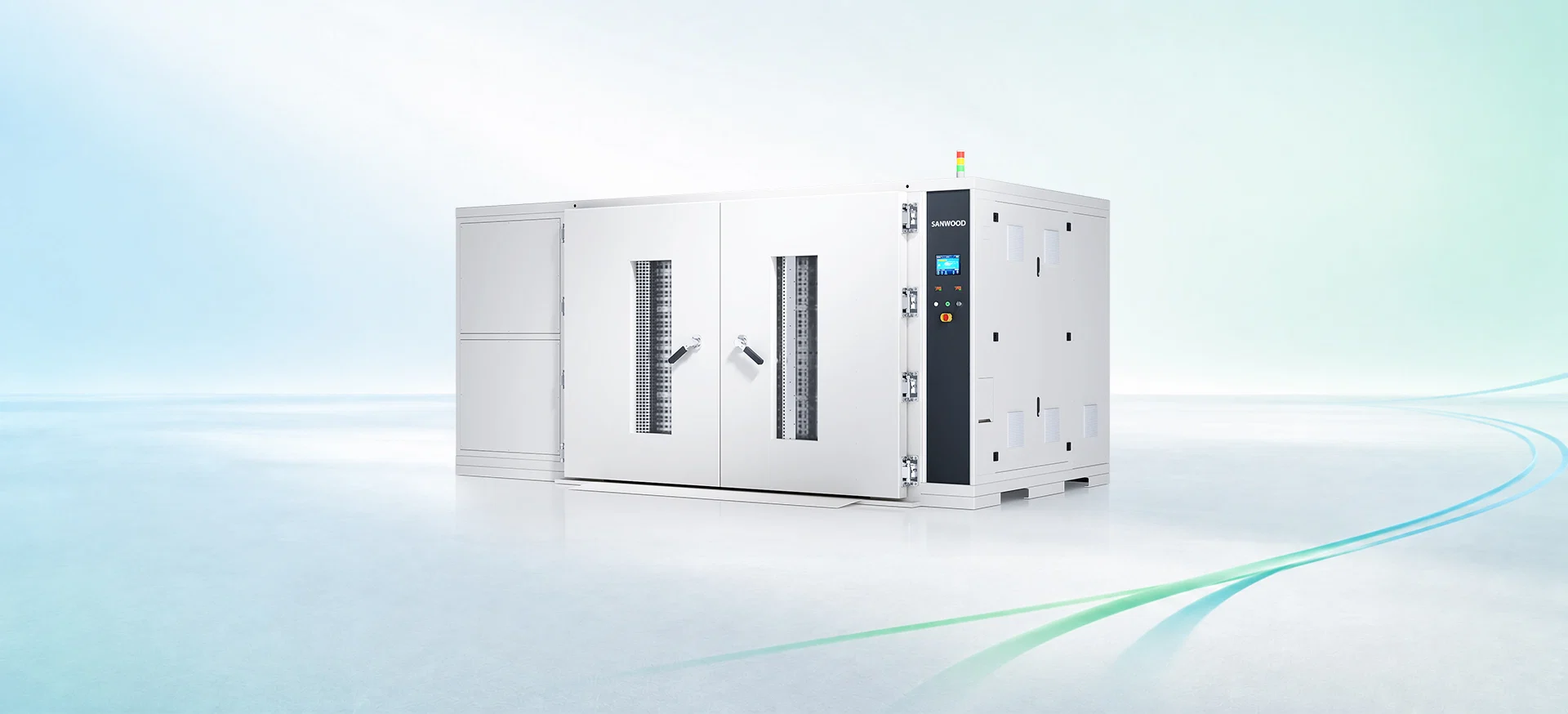
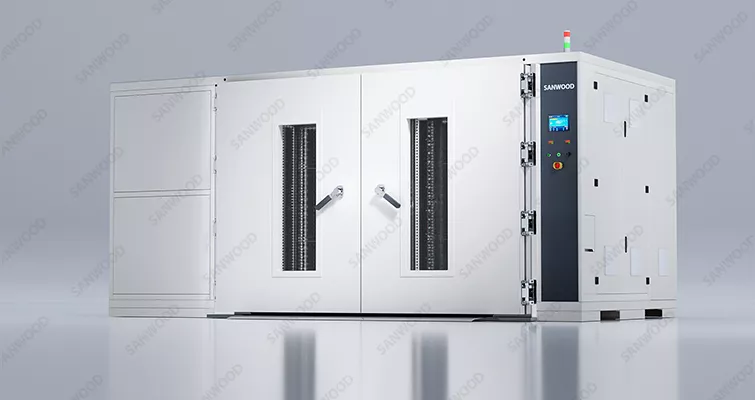
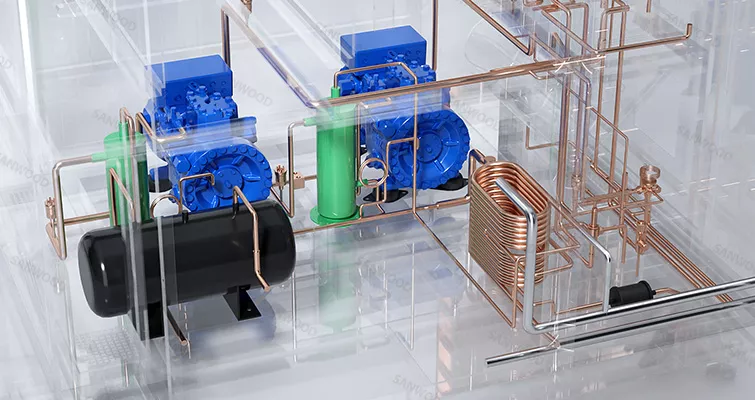
A: Fully populated AI server racks generate immense heat spikes that counteract cooling loops. Sanwood's specialized environmental test chamber platform defeats this lag by incorporating a proprietary feed-forward power-balancing algorithm linked directly to sub-rack power monitoring networks. The microsecond an electrical power surge is logged, the controller instantly micro-modulates electronic expansion valves to inject pre-calculated excess refrigeration capacity into the laminar airflow loop, neutralizing up to 60 kW of dynamic heat right at the chassis exhaust before the chamber climate can drift.
Q2: Why does uniform thermal cycling on an 8U AI server chassis require a specialized laminar cross-flow wind-wall instead of standard vertical airflow loops?
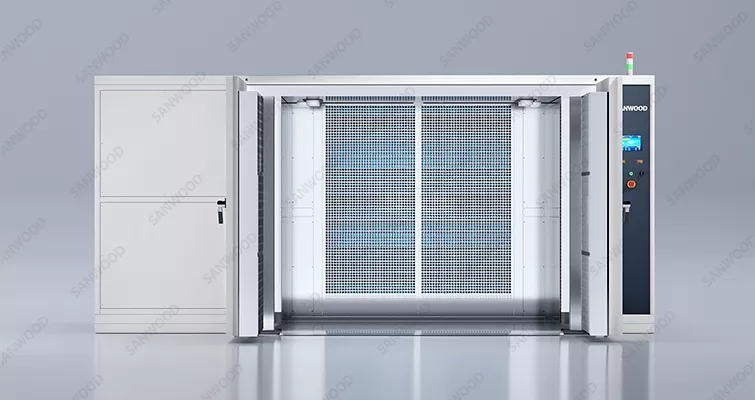
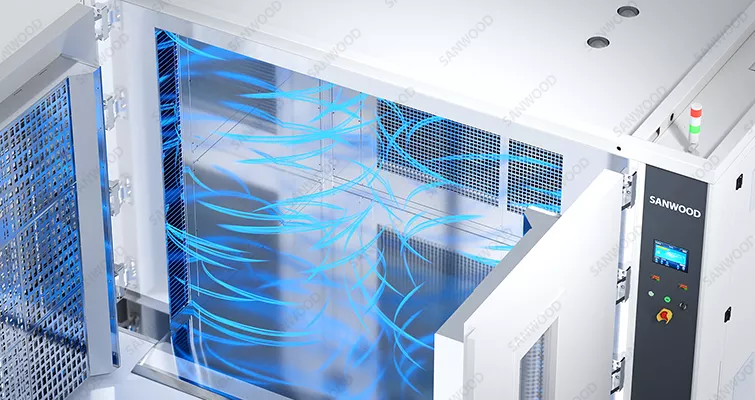
A: Air naturally seeks the path of least resistance. When a massive 8U AI server chassis is rolled into a chamber, its high internal resistance causes vertical air to bypass around the sides of the rack, leaving inner core logic boards trapped in stagnant "thermal pockets." Sanwood's high-rate climatic test chamber platform eliminates this bypass effect by deploying a lateral cross-flow positive-pressure blower wind-wall. This layout forces high-static pressure streams horizontally across every card slot layer, forcing the laminar airflow straight through internal heat sinks to ensure synchronized, repeatable stress tracking.
Q3: How does the dynamic control loop block fatal condensation on high-voltage server power busbars when returning from a deep-freeze screening run back to ambient ground conditions?
A: After cold soaking down to -40°C, the heavy thermal mass of copper power busbars causes them to remain frozen while the surrounding chamber air is rapidly heated. If the air dew point rises above the board surface temperature, moisture instantly condenses, causing short circuits. Our environmental test chamber platform eliminates this risk by integrating an automated dry air/nitrogen purge loop linked to real-time surface temperature thermocouples. Before triggering the rapid heating sequence, the controller injects large volumes of desiccated dry air to suppress internal relative humidity below 3%, keeping the air dew point tightly locked far below the hardware's lagging thermal profile throughout the transition.

 English
 中 文
中 文


 info@sanwood.com