Q1: How does the AB-Series prevent thermodynamic cross-bleeding when Zone A is running a maximum 150°C profile while Zone B is maintaining a cold ambient state?
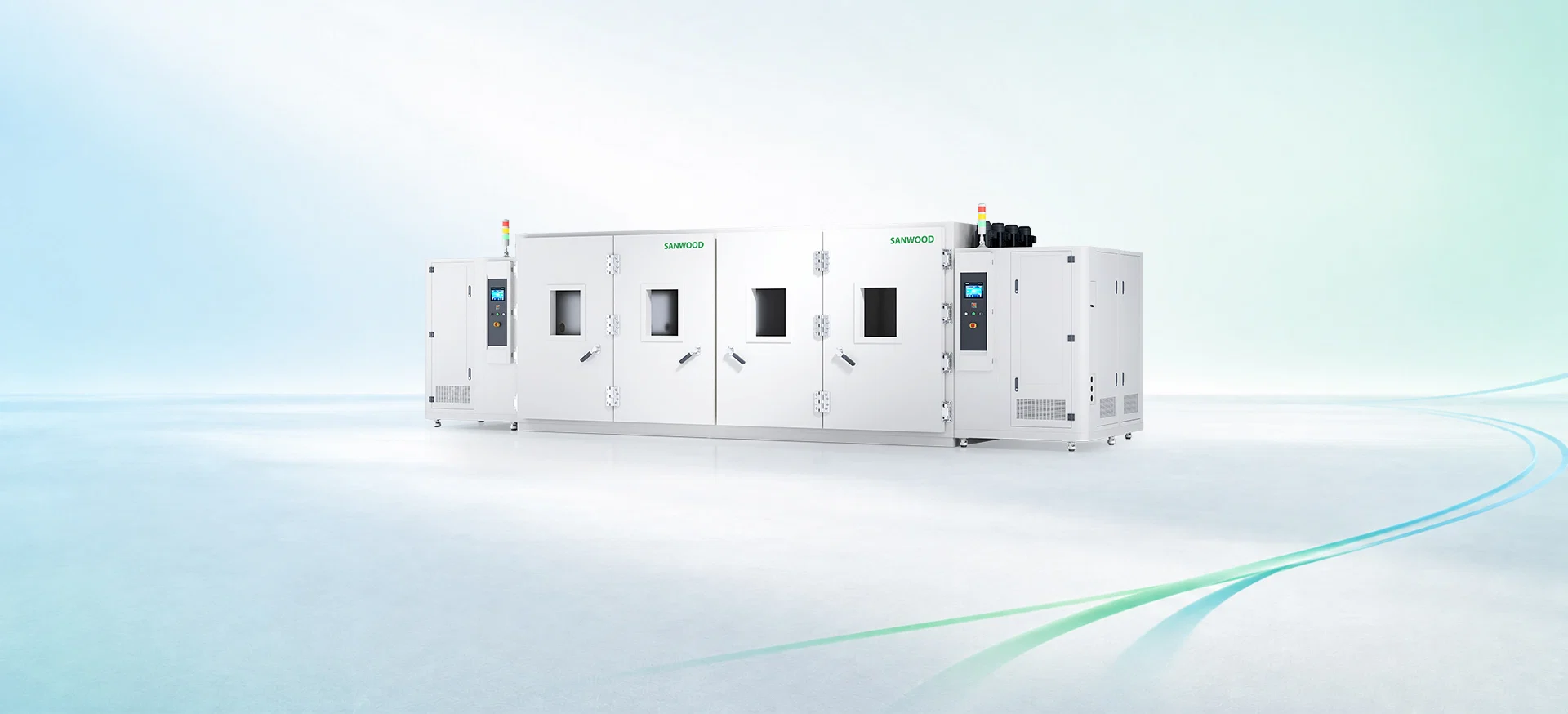
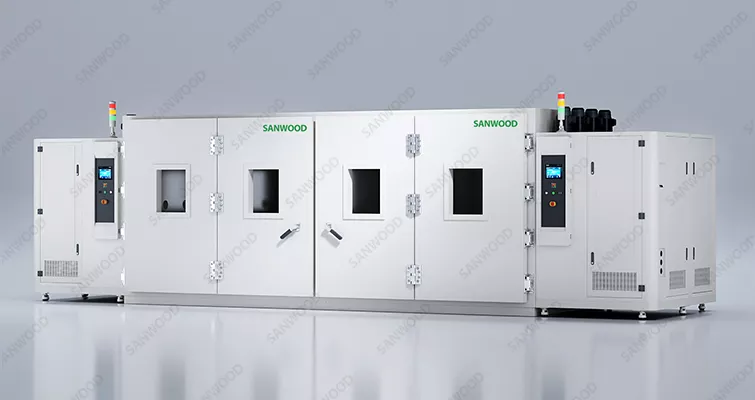
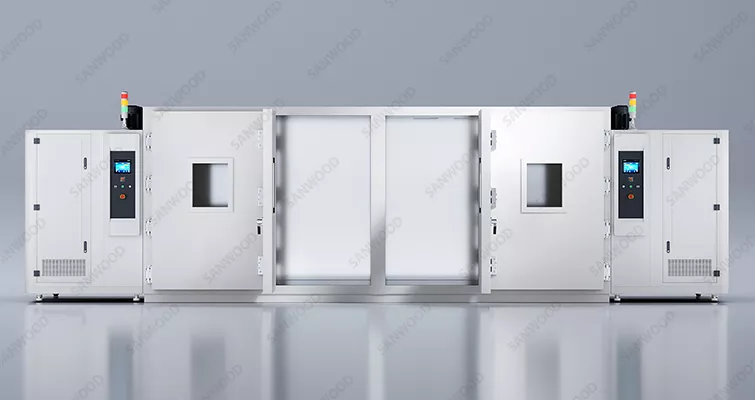
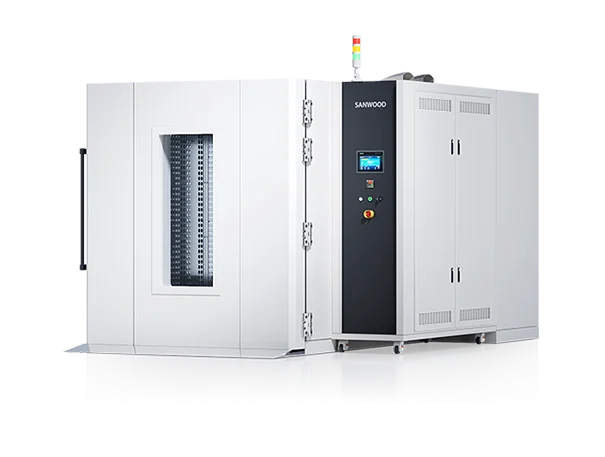
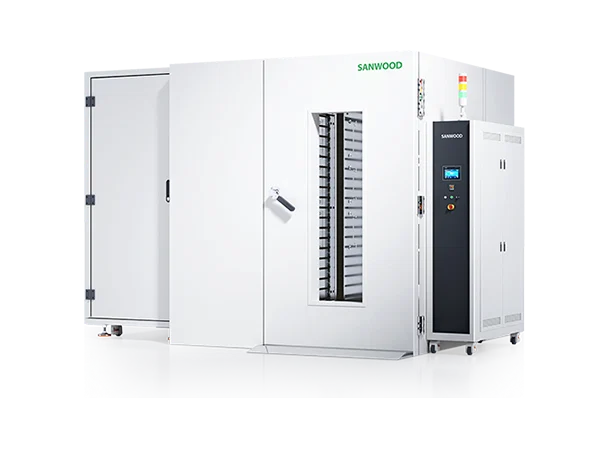
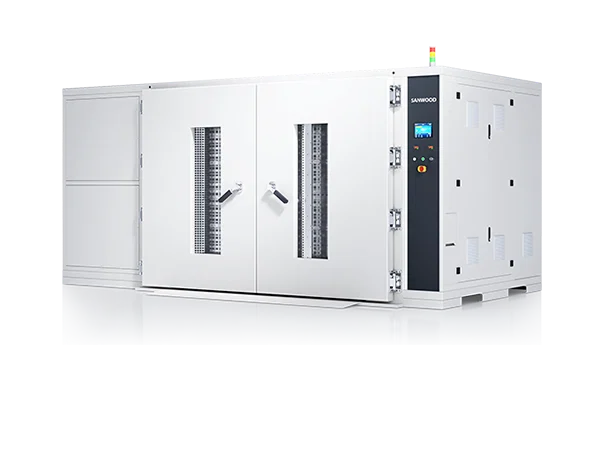
A: Preventing thermal bleeding across an asynchronous dual-zone setup requires heavy-duty thermal breaking. Sanwood's specialized climatic test chamber layout solves this by deploying a 150mm thick, high-density multi-layered aluminosilicate ceramic-fiber core sandwich within the interlocking partition wall. This structural bulkhead is paired with dual-path, high-pressure inflatable high-temperature silicone gaskets that expand dynamically when pneumatically engaged. This creating an absolute hermetic seal that clamps down tightly against the machine's precision-machined interior jambs. The thermal break boundary is so rigid that running Zone A at a sustained 150°C steady-state transfers near-zero radiant energy to Zone B, maintaining a cold, uninfluenced local micro-climate across the partitio.
Q2: How does the air velocity network prevent flow stalling and localized cold spots when the chamber is merged into a single large-capacity testing hall?
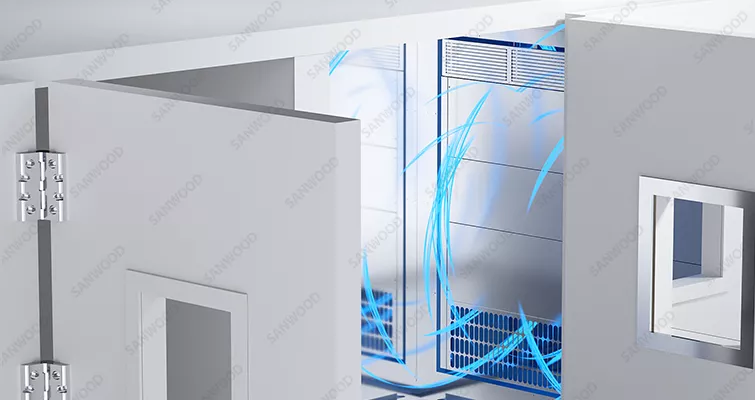
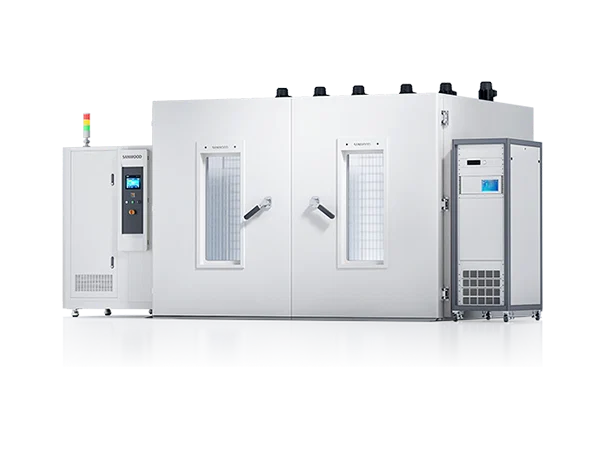
A: Merging two separate walk-in enclosures into an ultra-wide, unified environmental test chamber inherently risks airflow detachment and velocity dropping across the center span, especially when dense component testing carts create heavy friction. We overcome this by utilizing a symmetrical cross-flow positive-pressure blower wall configuration on both outer lateral walls. High-static variable-frequency centrifugal blower columns force conditioned air horizontally from both edges inward. Rather than random turbulence, these opposing wind vectors collide and are evacuated symmetrically through an array of balanced, negative-pressure vertical extraction plenums built directly into the central recessed floor grid. This forces the horizontal laminar air to plunge straight through the component card cages evenly, locking the spatial temperature uniformity strictly below ±1.5°C across the entire combined workspace
Q3: What specific utility management protocols control the electrical infrastructure when switching between independent dual-zone operation and single merged volume testing runs?
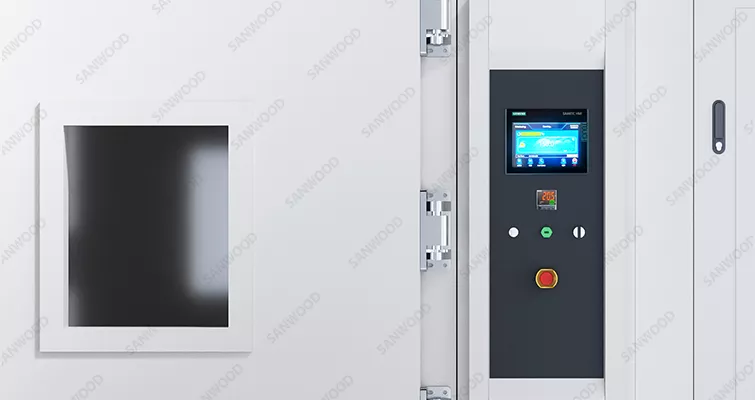
A: Operating a high-capacity system requires intelligent energy scaling to prevent excessive factory grid loading and cut running costs. Our specialized environmental test chamber platform incorporates a distributed, multi-bank solid-state relay (SSR) power distribution network tied to predictive feed-forward control algorithms. When the laboratory manager selects decoupled single-zone testing (e.g., operating only Zone A for a small sample batch), the master processing core automatically shuts down the sub-rack power relays and air blower columns assigned to Zone B. It dynamically scales the system's active electrical footprint down to half-load utility, preventing oversized air volume heating, lowering standby grid surges, and maximizing cleanroom operational cost efficiency.
Q4: How does the interlocking center partition seal survive long-term non-stop 150°C operational cycles without suffering mechanical warp or vacuum leakage over years of tool usage?
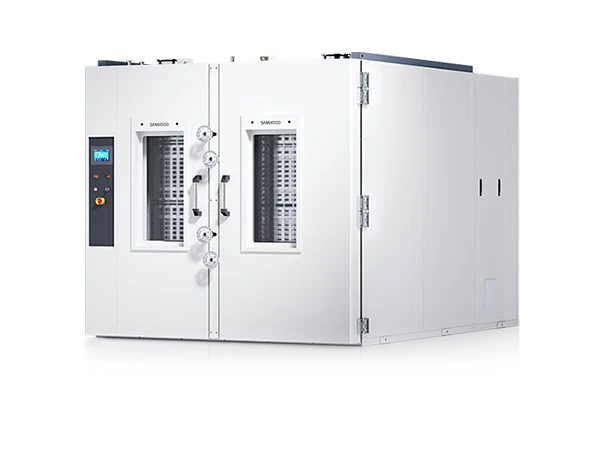
A: The center partition junction on a modular climatic test chamber undergoes intense thermomechanical stress cycles due to the linear thermal expansion mismatch of stainless steel panels. To guarantee permanent structural alignment, Sanwood utilizes a heavy-duty, structural internal carbon-steel exoskeleton fully welded behind high-tensile 304 stainless steel liner paths. The interlocking joint features precision CNC-machined tongue-and-groove profiles embedded with a dual-path continuous high-temperature fluorosilicone compression gasket matrix. This allows the modular structure to absorb continuous heating and cooling expansion waves freely without localized metal buckling or panel distortion, ensuring zero thermal or pneumatic leakage across decades of continuous, rigorous testing cycles.

 English
 中 文
中 文


 info@sanwood.com