Q1: How does the AGREE test chamber isolate its own structural framework from the severe mechanical forces generated by a docked 100-kN electrodynamic vibration shaker?
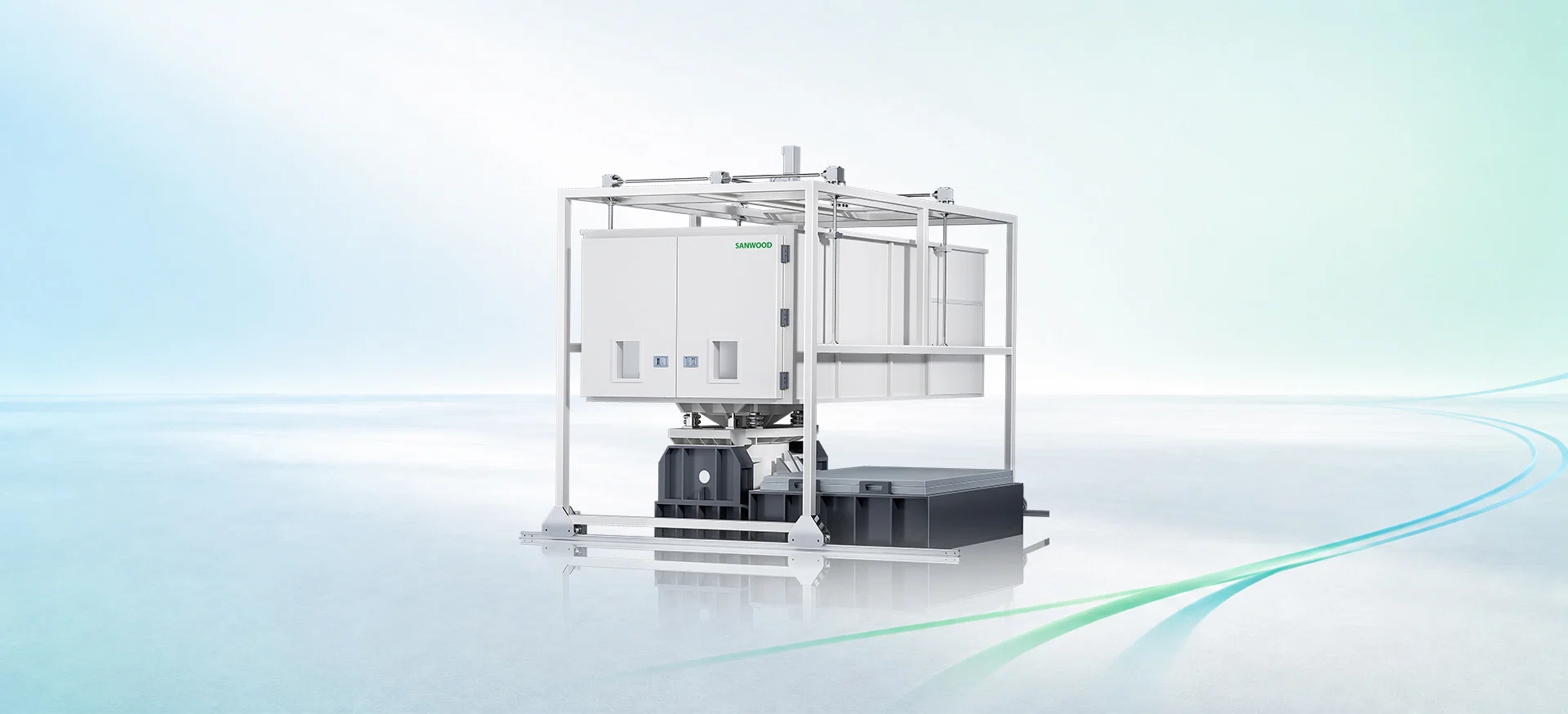
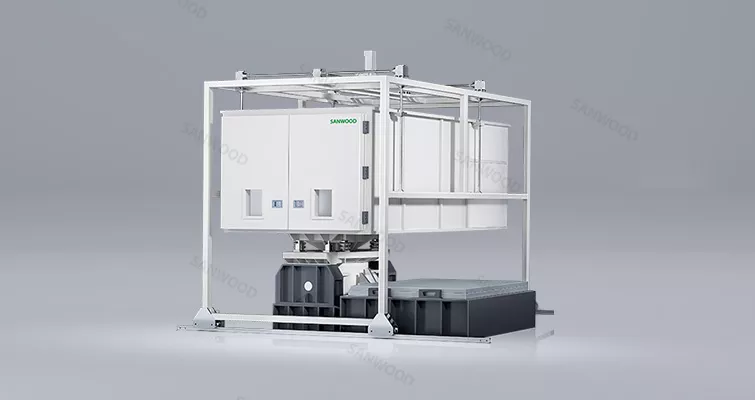
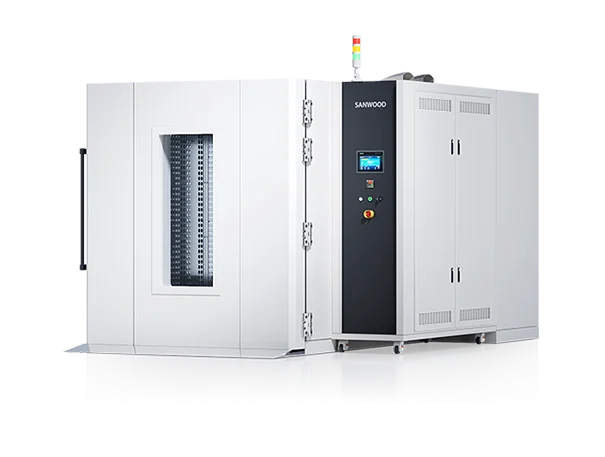
A: Docking a high-capacity shaker directly to a chamber presents intense mechanical transmission challenges, as uncontrolled resonance would instantly destroy the internal walls and fatigue the compressor lines. Sanwood's specialized environmental test chamber overcomes this threat by implementing a completely floating, multi-layered structural decoupling base frame. The physical interface floor is sealed using a customized, high-throw molded fluorosilicone flexible diaphragm backed by stainless steel expansion collars. This configuration absorbs the high-frequency vibration strokes entirely at the joint seam, preventing any dynamic force from bleeding back into the main enclosure skeleton or disrupting the delicate cooling loop capillary networks.
Q2: Why are standard vertical airflow loops completely modified inside a combined vibration climatic test chamber?
A: Standard vertical top-down airflow is highly inefficient in an AGREE system because the massive vibration fixture and the DUT itself block the vertical air path, creating a large stagnant thermal pocket right above the shaker head. Our high-rate climatic test chamber architecture overcomes this aerodynamic obstruction by re-engineering the internal flow into a high-velocity lateral laminar cross-flow wind-wall. Driven by heavy-duty variable-frequency centrifugal fans, the air is forced horizontally across the testing grid. This layout breaks through the thermal boundaries of the high-resistance vibration fixtures, guaranteeing a tight spatial uniformity below ±1°C even during peak compressor cooling ramps.
Q3: How does the control network manage condensation risks on the cold shaker armature head during high-humidity hot-to-cold transition sweeps?
A: Shifting rapidly from hot, high-humidity soak phases down to sub-zero deep freeze causes moisture to instantly condense on the high-thermal-mass shaker head, causing electrical flashovers inside the dynamic coils. Our advanced environmental test chamber platform completely suppresses this short-circuit risk through a predictive, feed-forward dry air injection curtain net. The microsecond a downward thermal trajectory is registered, the main controller activates an inline low-dew-point compressed desiccant air purge grid focused directly across the lower shaker seal interface. By maintaining the local relative humidity below 3%, the air dew point is locked securely below the armature surface temperature, ensuring zero dew tracking throughout the run.
Q4: What specific facility footprint and structural alignment constraints are critical when deploying an AGREE climatic test chamber with a horizontal slip table configuration?
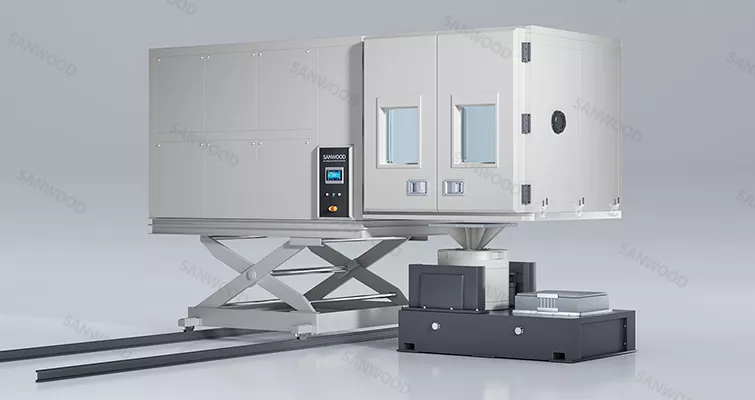
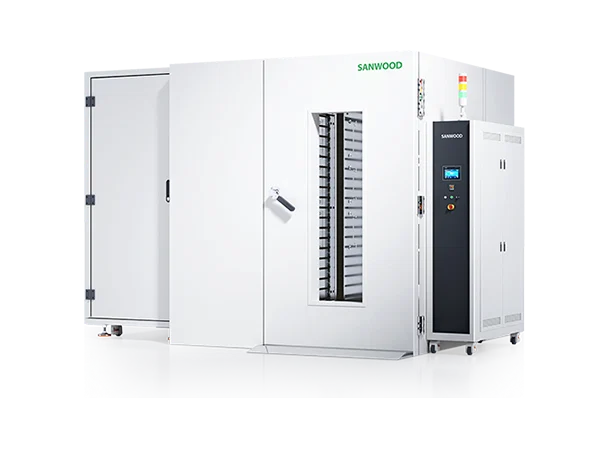
A: Operating an AGREE chamber with both a vertical armature and a horizontal slip table demands exceptional structural precision, as the slightest misalignment will bend the shaker shaft and introduce cross-axis measurement noise. To ensure scalable reliability, Sanwood's customized climatic test chamber is mounted on automated, heavy-duty CNC-machined V-groove track guide rails with integrated hydraulic height-adjustment jacks. This infrastructure allows facility teams to effortlessly glide the entire multi-ton enclosure backward, pivot the shaker to horizontal mode, and lock the chamber down with absolute sub-millimeter axial alignment, optimizing laboratory workflow speed while eliminating mechanical linkage fatigue.

 English
 中 文
中 文


 info@sanwood.com