Website: Sanwood
Language:
English

Precision Environmental Test Chambers & Climatic Simulation Systems

Sanwood Technology designs and manufactures an engineered matrix of high-performance environmental testing platforms built to isolate latent material flaws and protect mission-critical hardware assets.

From high-throughput semiconductor acceleration systems to baseline thermodynamic cabinets, our equipment enforces strict spatial uniformity, rigorous climate control, and rapid thermal transition cycles. Fully aligned with global compliance criteria (JEDEC, AEC, MIL-STD, ASHRAE), this scalable instrumentation enables engineering teams to rapidly precipitate structural anomalies while providing procurement decision-makers with the absolute assurance of operational reliability and accelerated time-to-market.

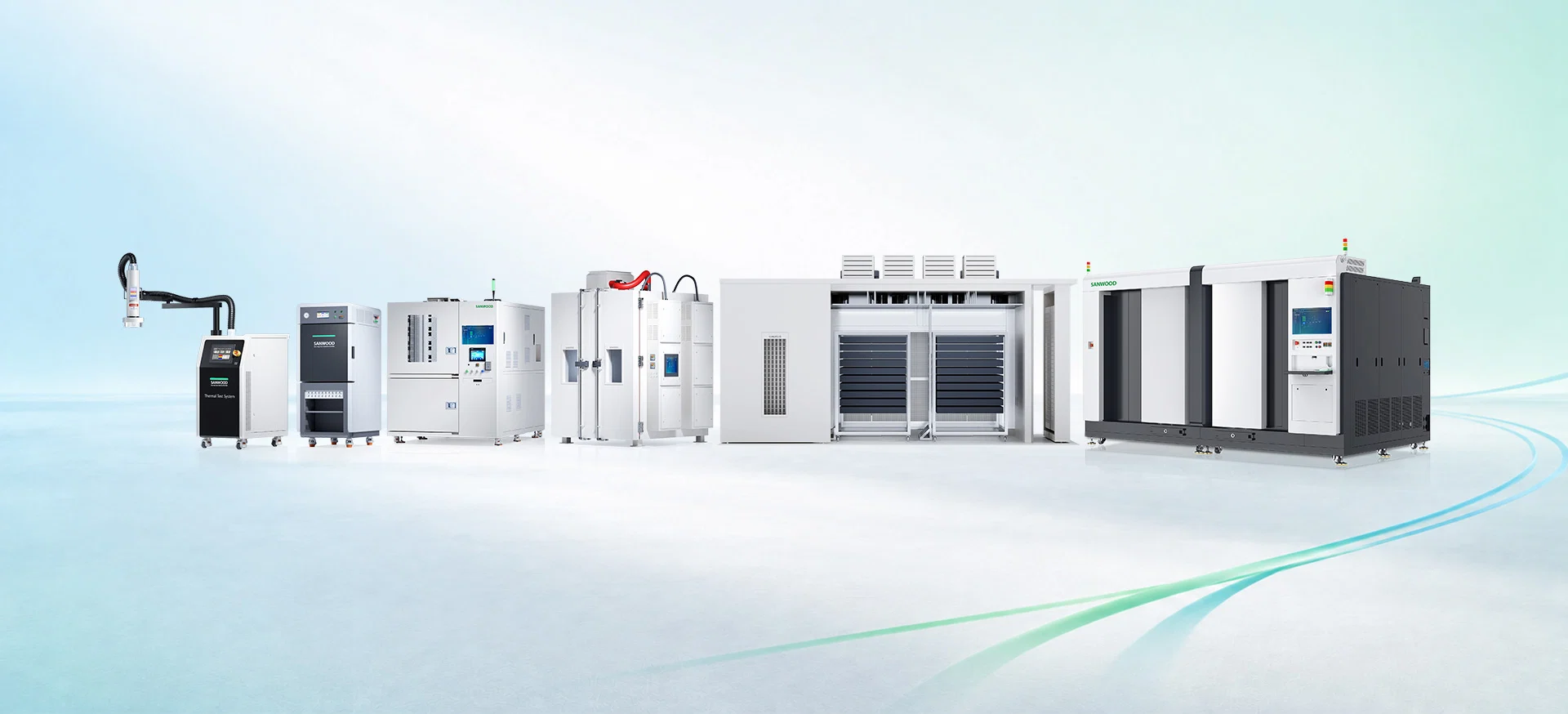
Sanwood Test Chamber Manufacturer

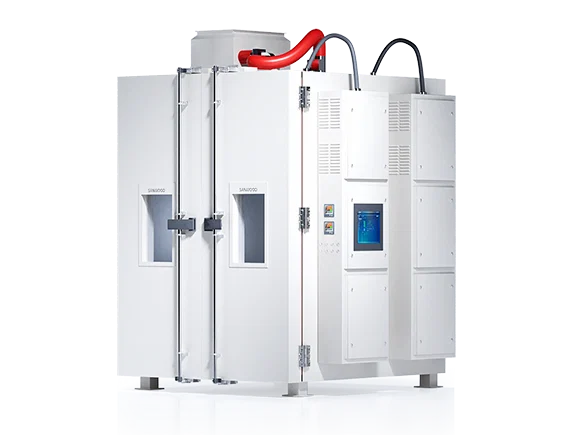
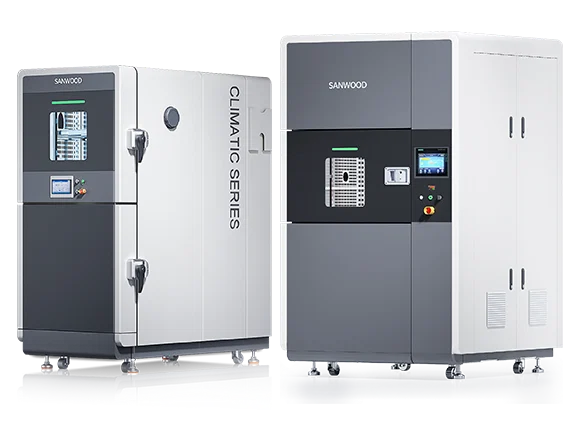
We offer a wide range of environmental test chambers designed to meet almost all testing conditions. Our product lineup includes: ESS Test Chamber, Thermal Shock Test Chamber, Walk-in Altitude Test Chamber, Walk-in Temperature Test Chamber, Damp-heat Alternative Test Chamber, Agree Chamber, HAST Chamber, Battery Temperature Explosion-Proof Test Chamber, MIL Standard Dust Chamber, Xenon Aging Chamber, UV Aging Chamber, etc.

Read more

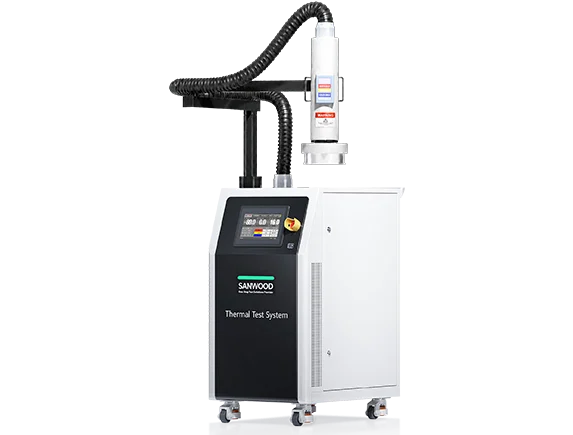
Temperature Forcing Systems

Sanwood Technology's Temperature Forcing Systems deliver high-velocity, localized thermal airstreams directly to the device under test (DUT), eliminating the thermal mass latency inherent in conventional bulk climatic chambers. Engineered for advanced semiconductor characterization, wafer-level reliability verification, and seamless ATE interface integration, this platform transitions from extreme cryogenic baselines to high-temperature thresholds in seconds.

This localized thermal injection is critical for tracking real-time parametric drift, verifying wide-bandgap semiconductor (SiC/GaN) stability, and exposing latent IC package thermal faults in absolute alignment with JEDEC and AEC-Q100 protocols.

Learn more

Memory Burn-in Test Systems

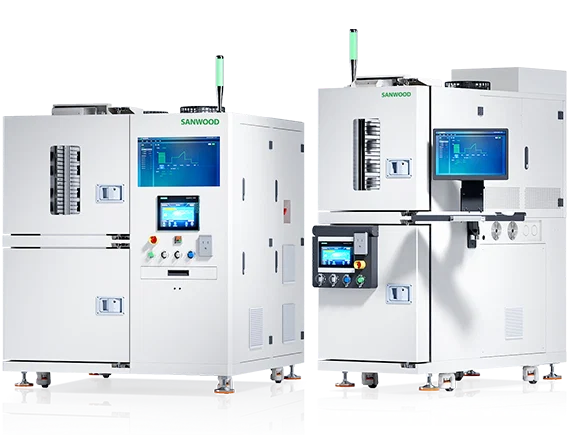
Engineered to accelerate the precipitation of infant mortality defects in next-generation DRAM, NAND Flash, and High Bandwidth Memory (HBM) architectures, these high-capacity validation platforms execute rigorous Test-During-Burn-In (TDBI) protocols.

By synchronizing high-density parallel test slot matrices with proprietary thermodynamic control loops, this instrumentation effectively counteracts the massive thermal dissipation generated during intensive electrical stress profiling. Maintaining strict spatial temperature uniformity across dense component loads allows Sanwood systems to systematically isolate latent dielectric breakdown, electromigration, and micro-leakage anomalies, ensuring absolute alignment with JEDEC and enterprise-grade hardware validation criteria.

Learn more

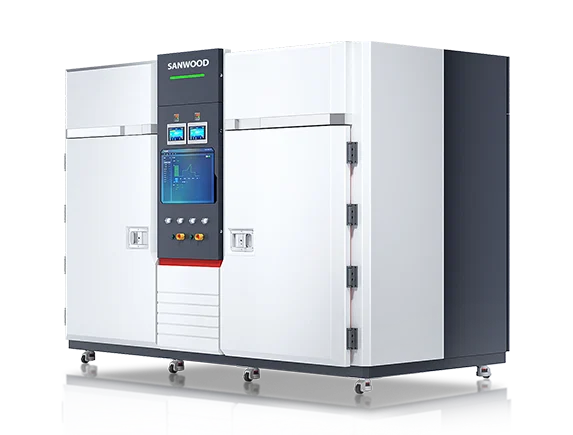
HALT & HASS Chambers

Engineered to rapidly expose latent design flaws and manufacturing anomalies during critical R&D and production phases, these high-rate thermal shock and multi-axis vibration systems combine extreme rapid thermal cycling with 6-degree-of-freedom (6-DoF) repetitive shock profiling.

By driving temperature ramp rates exceeding 60℃ per minute alongside omnidirectional random vibration levels up to 100 Grms, this instrumentation compresses months of field stress into hours of laboratory testing. This ultra-accelerated stress profile allows Sanwood systems to systematically trigger fatigue in solder joints, precipitate mechanical component cracking, and expose internal delamination issues, ensuring total hardware robustness and strict compliance with high-reliability electronics validation standards.

Learn more

HAST Chambers

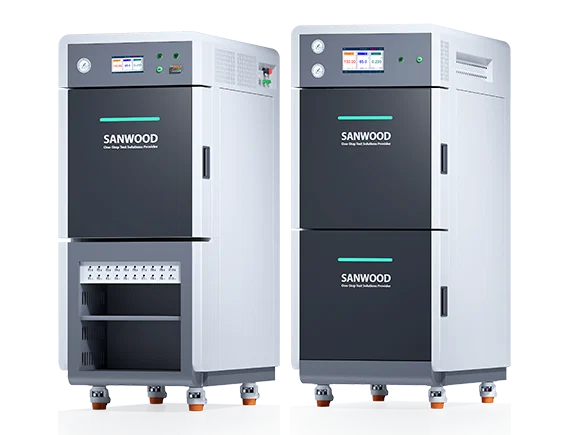
Compressing standard 1,000-hour damp heat evaluations into a precise 96-hour window, Sanwood HAST systems utilize unsaturated steam pressure to isolate latent moisture-resistance vulnerabilities across advanced IC packages and wide-bandgap substrates.

This specialized environmental simulation platform operates at severe thermodynamic limits—maintaining precise control up to 142℃, 85% RH, and 0.41 MPa non-condensing vapor pressure—to force moisture penetration through protective passivation layers without causing artificial surface pooling. By rapidly triggering localized electrochemical migration, galvanic corrosion, and micro-leakage failures on an accelerated timeline, this instrumentation delivers definitive reliability data in absolute alignment with JEDEC JESD22-A110, A118, and IEC certification standards.

Learn more

High Low Temperature Test Chambers

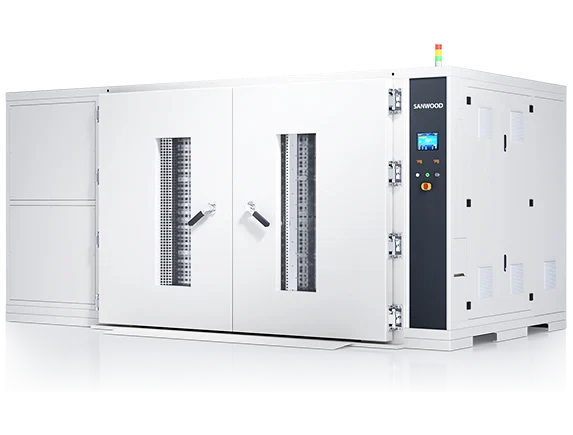
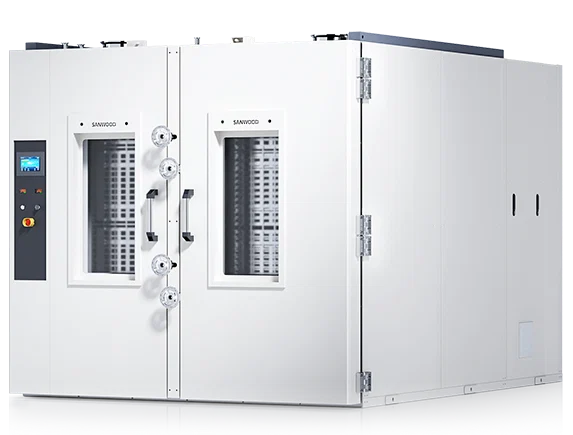
Maintaining rigid thermal stabilization across high-density storage arrays and massive structural sub-assemblies requires absolute spatial uniformity. Spanning specialized CSSD/ESSD testing architectures to modular Walk-In and AB-Series high-temperature aging configurations, these climatic environmental platforms isolate subtle thermal dissipation anomalies under continuous operational loads. The advanced multi-zone air balancing control integrated into Sanwood chambers systematically precipitates latent firmware-thermal tracking errors, micro-component delamination, and power-rail voltage drift before deployment.

This heavy-duty validation layer delivers actionable long-term reliability metrics, ensuring total hardware compliance with enterprise data center, automotive electronics, and military-grade hardware screening mandates.

Learn more

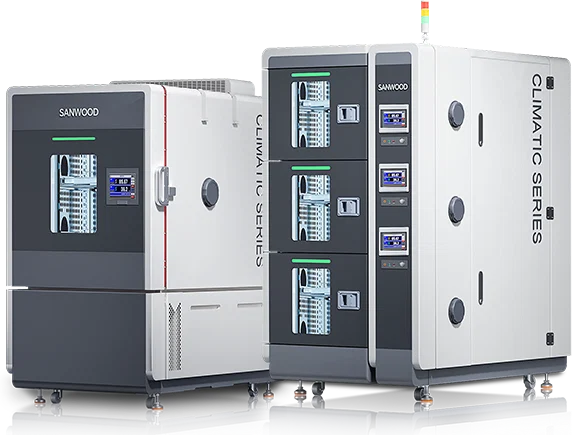
Temperature Humidity Test Chambers

Isolating latent hardware defects across advanced semiconductor, aerospace, and energy storage architectures requires shifting environmental simulation from static conditioning to dynamic, multi-axis stress injection.

By integrating high-velocity fluid thermodynamics with precise micro-climate profiling, these specialized environmental testing platforms systematically accelerate subsurface failure mechanisms—including interfacial delamination, CTE mismatch fatigue, and electrochemical migration. Transforming severe, multifaceted testing envelopes into actionable, real-time durability data ensures total hardware robustness and rigid compliance with global JEDEC, AEC-Q100, and MIL-STD validation protocols before deployment.

Learn more

Thermal Shock Test Chambers

Subjecting microelectronics and multi-material sub-assemblies to sub-second temperature transitions isolates latent material strain before it manifests as catastrophic field failures.

Designed to bypass the gradual ramp phases of standard climatic testing, these air-to-air thermal shock platforms force immediate structural contraction and expansion. This brutal thermal disruption destabilizes compromised interfaces, providing engineering teams with a rapid, uncompromised evaluation of component integrity under severe survival profiles.

Learn more

ESS Rapid Temperature Change Chambers

Managing the intense thermal dissipation of next-generation GPU clusters and high-density storage arrays during stress screening demands a radical departure from conventional environmental conditioning.

Sanwood ESS rapid temperature change chambers bridge the critical gap between passive climatic soaking and destructive thermal shock by enforcing aggressive thermal ramp rates up to 20℃/min under active operational loads. This specialized environmental simulation platform combines high-velocity multi-zone airflow with massive refrigeration displacement, forcing latent multi-layer PCB delamination, high-current power rail instabilities, and firmware-thermal tracking errors to manifest as identifiable faults before field deployment.

Learn more

Altitude Test Chambers

Air density drops exponentially with altitude, fundamentally altering the fluid mechanics of forced-air cooling and compromising dielectric insulation boundaries.

Sanwood low-pressure simulation chambers tackle this specific hypobaric challenge by decoupling precise temperature loops from vacuum depressurization down to fractional kilopascal levels. This independent control allows test engineers to evaluate hardware performance where traditional fan affinity laws fail and heat sink thermal resistance plummets due to reduced molecular mass flow.

By replicating unpressurized flight transit and high-altitude deployment profiles, the instrumentation isolates catastrophic arc tracking, structural seal swelling, and localized thermal choking, delivering definitive survival data that satisfies MIL-STD-810H Method 500.6 and RTCA DO-160G compliance mandates.

Learn more

Want to know more? Talk to an expert! Leave a message and a specialist will get back to you.

Information on how we processyour personal data.