Q1: How does this double-layer chamber prevent thermal crosstalk when the top layer is baking at 150°C while the bottom layer runs a deep freeze profile at -40°C?
A: Managing an extreme 190°C thermal differential over a vertical span of just a few centimeters presents a critical insulation challenge, as unchecked heat leaking would instantly distort the lower compartment's sensor loops. Sanwood's advanced temperature humidity test chamber overrides this thermodynamic risk by embedding a structural dual-barrier thermal break bulkhead between the lower ceiling and upper floor. This panel combines multi-layered high-density aluminosilicate fiber blankets with an ultra-low thermal conductivity non-metallic structural isolation joint framework. This architectural thermal block stops convective and conductive energy transference completely, ensuring each zone locks its respective climate public tolerances accurately.
Q2: Are the mechanical vibrations from the top tier's refrigeration compressors isolated from the delicate testing matrix running inside the lower chambers?
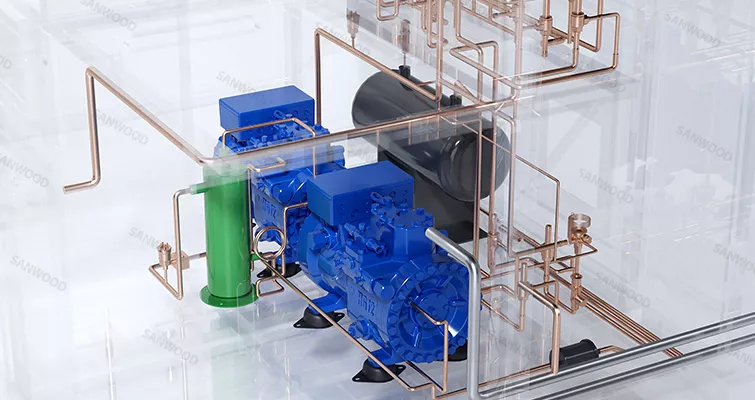
A: Compressing refrigerant at high velocity inside a vertically stacked tower configuration naturally introduces physical resonance that can travel down the frame, potentially rattling fragile MEMS chips or micro-solder test boards below. To eliminate this distortion, our specialized environmental test chamber framework uses an advanced acoustic and mechanical vibration isolation topology. Every compressor package is floating-mounted on an independent sub-base fitted with heavy-duty multi-stage multi-directional dampening springs and elastomeric shear pads. This mechanical decoupling filters out over 98% of structural micro-shocks right at the motor source, guaranteeing a dead-calm testing floor inside both compartments throughout parallel runs.
Q3: How does the consolidated utility and drainage framework manage dual-layer humidity runoff without risk of structural backing or fluid cross-contamination?
A: Condensation drainage in a stacked setup is a highly sensitive vector, as running high-humidity cycles on the top tier creates large continuous water runoff that can overflow onto the lower electronics if routed poorly. Our high-rate climatic test chamber platform manages this through a completely decoupled, dual-path vertical drainage manifold system. The upper layer is fitted with an anti-sloshing welded stainless steel collector pan connected to an insulated, sealed gravity-assisted drain line that bypasses the lower compartment footprint entirely. This independent fluid routing blocks humidity cross-contamination, ensuring that lower chamber dry-heat bakes remain entirely uncontaminated by upper-tier condensation.
Q4: What are the commercial ROI and laboratory infrastructure advantages of a stacked temperature humidity system compared to deploying two separate standalone chambers?
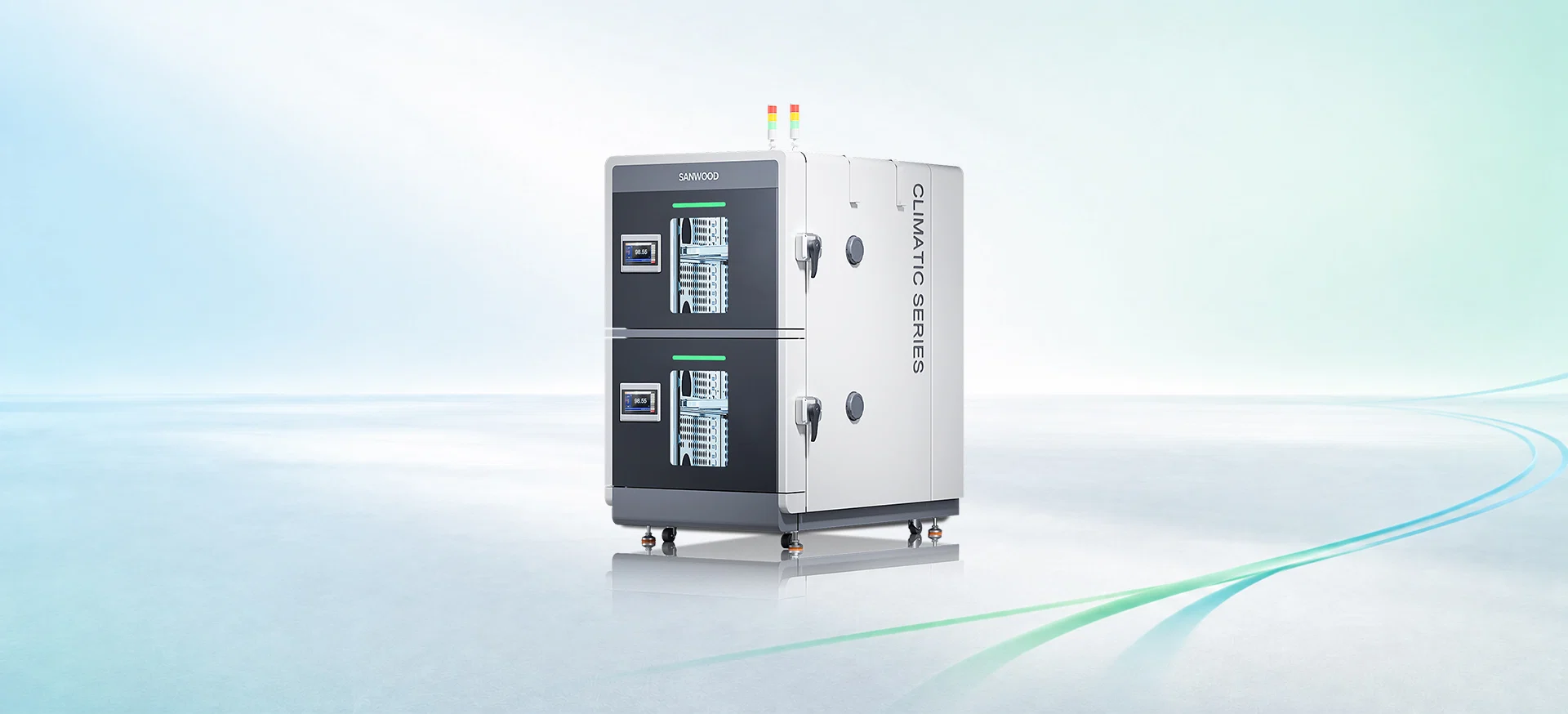
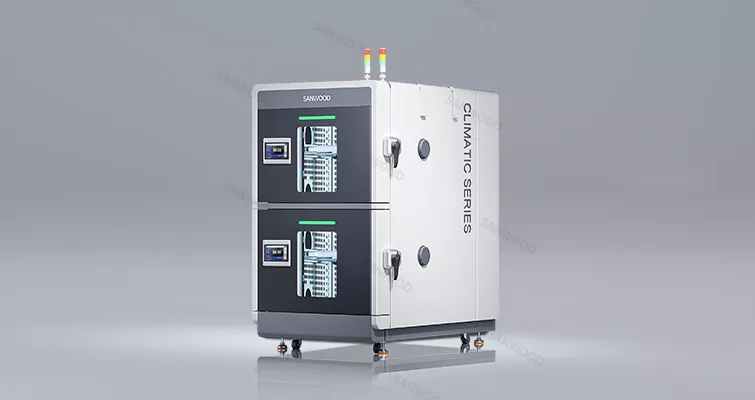
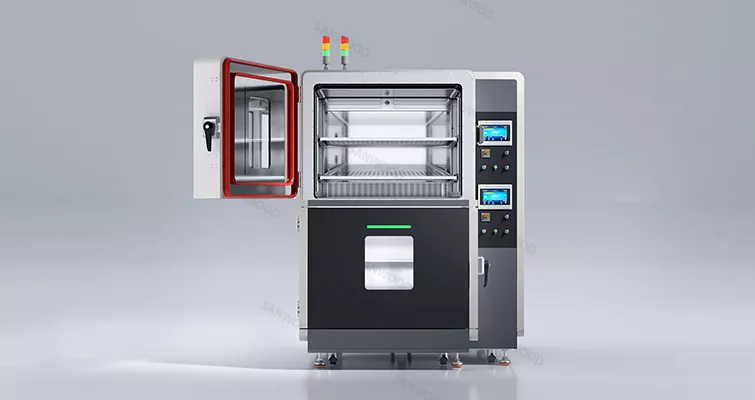
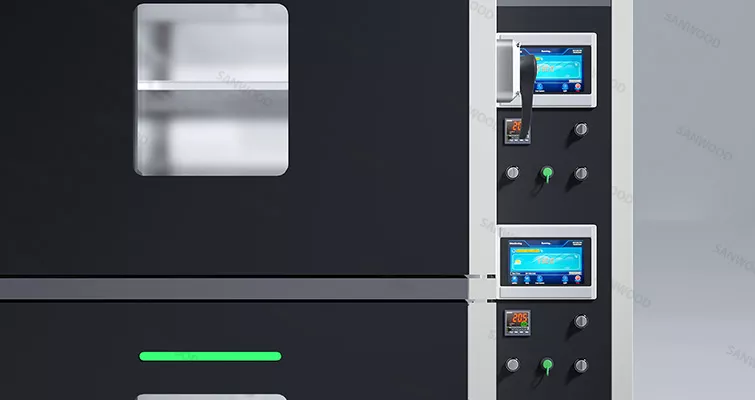
A: The capital and facility investment advantages are immediate and measurable across two major metrics: real estate conservation and deployment utility speed. Choosing our stacked temperature humidity test chamber configuration instantly recaptures 50% of your cleanroom floor print, allowing labs to double their parallel quality assurance throughput within their existing square footage. Furthermore, the consolidated control enclosure requires less extensive multi-drop electrical cable runs and individual facility plumbing overheads compared to two separate standalone platforms, drastically cutting down total facility installation costs and accelerating testing pipeline scalability.

 English
 中 文
中 文


 info@sanwood.com