Q1: What are the fundamental engineering advantages of selecting a three-zone stationary chamber over a two-zone pneumatic basket shock chamber?
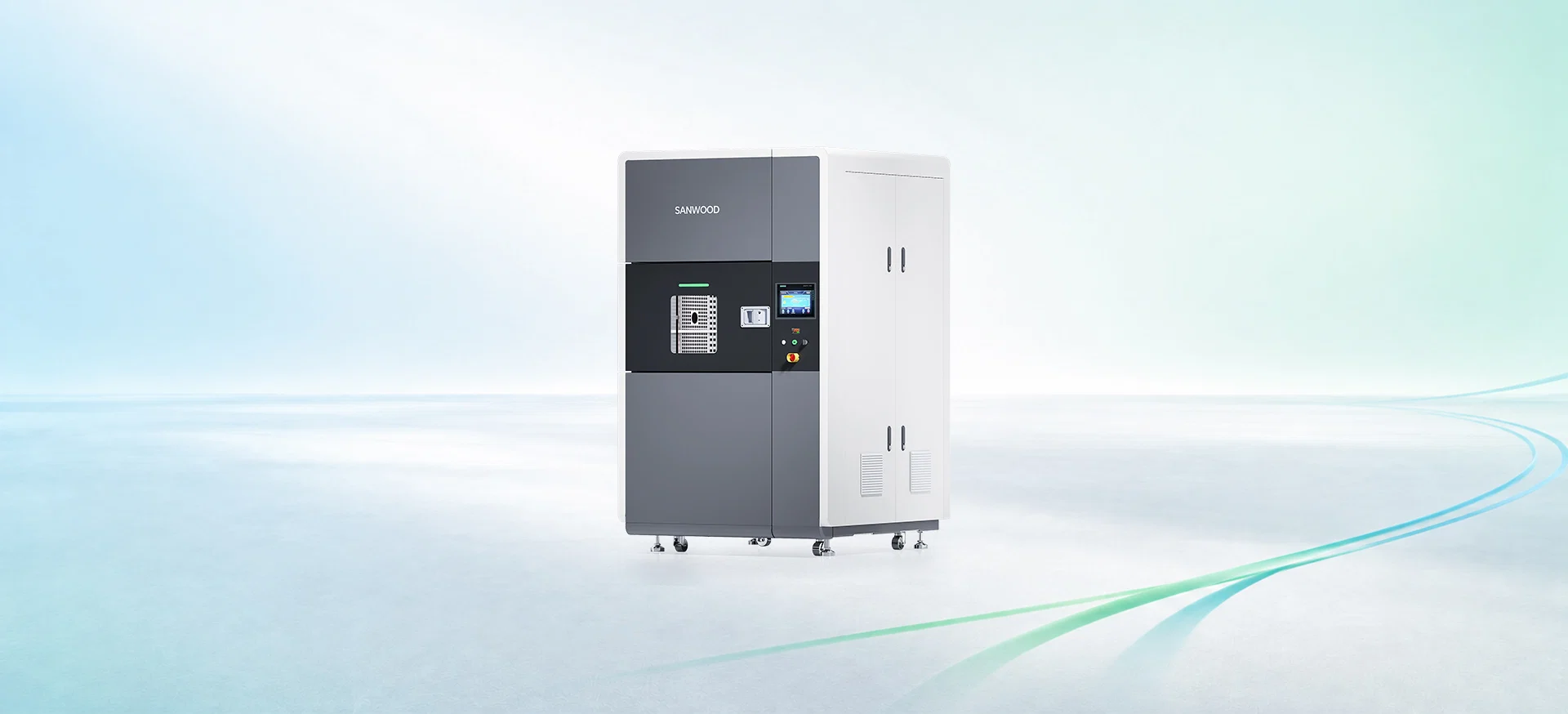
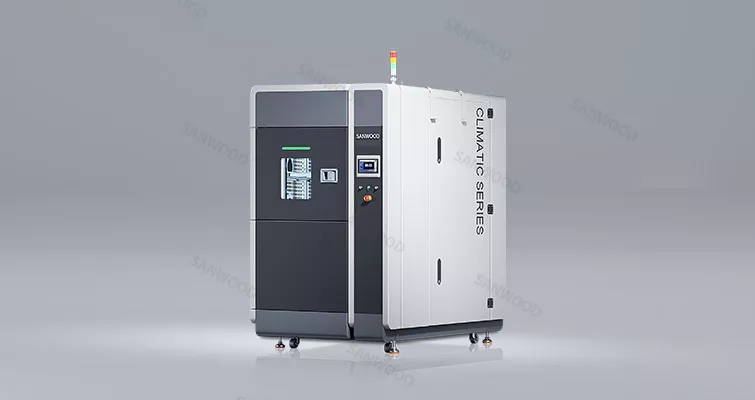
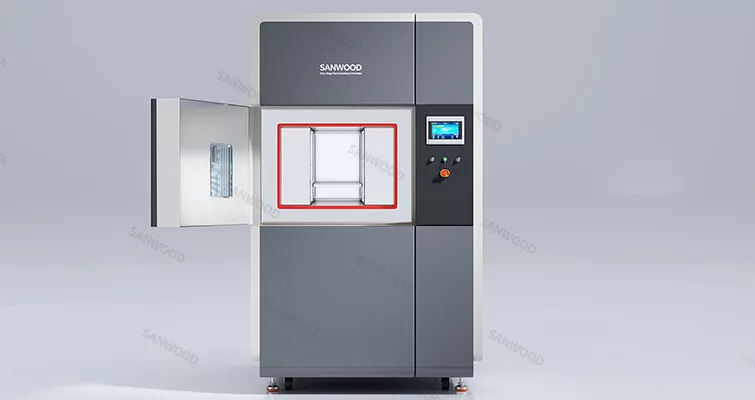
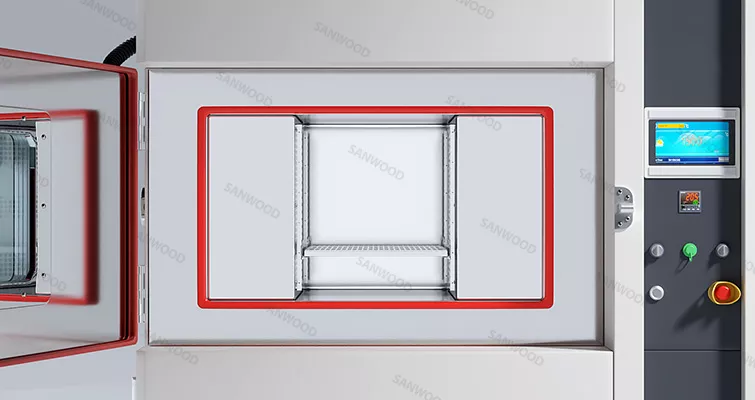
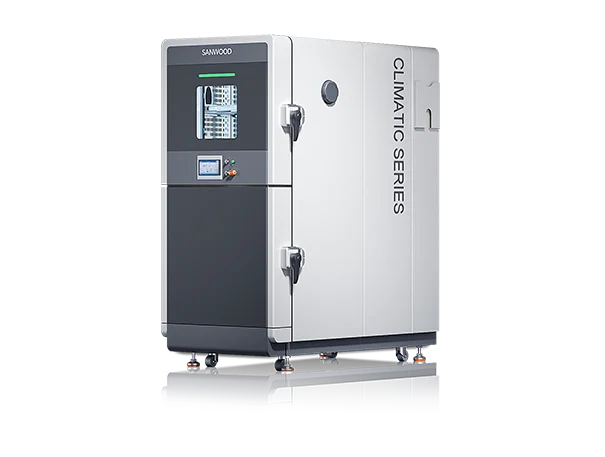
A: The core differentiator lies in mechanical safety and cabling integrity. A two-zone chamber physically launches the entire sample basket vertically, which injects severe inertia profiles and constantly pulls or twists the monitoring cables required for active biased testing, frequently causing false open-circuit failures. Sanwood's specialized environmental test chamber platform isolates this hazard completely by holding the DUT 100% stationary. Furthermore, the three-zone architecture integrates a dedicated ambient pre-conditioning enclosure, enabling standard three-stage shock profiles (Hot-Ambient-Cold) that allow real-world laboratory atmospheric venting, a feature impossible to execute in two-zone layouts.
Q2: How does the pneumatic damper network maintain a sub-5-minute temperature recovery window without the benefit of physically moving the sample into a pre-heated zone?
A: Moving the sample into a thermal reservoir provides instant contact, whereas a stationary system relies entirely on fluid dynamics. To match this thermal recovery pace, Sanwood’s high-rate climatic test chamber architecture couples over-specified low-lag heating/cooling banks with an oversized pneumatic damper valve block that opens completely in under 10 seconds. The microsecond the dampers actuate, a high-static pressure cross-flow wind-wall instantly dumps pre-conditioned thermal reserves as a high-velocity laminar sheet straight through the testing core, peeling away localized boundary layers on the stationary components and reclaiming spatial set-points within 5 minutes even under maximum load density.
Q3: What role does the "ambient zone" phase play in a three-zone shock profile, and how does it prevent internal refrigeration compressor thermal overload?
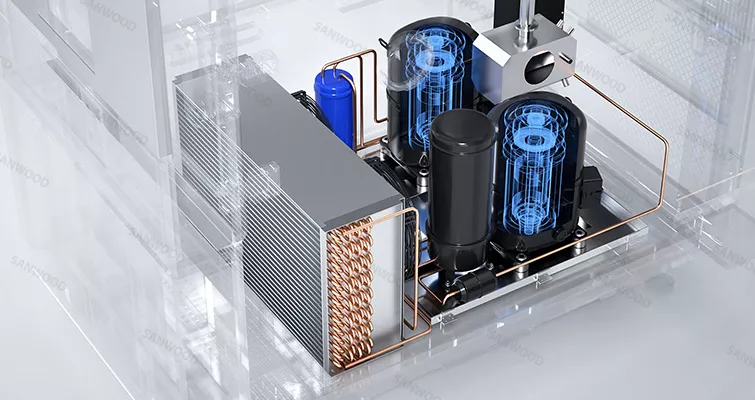
A: In standard testing, crashing directly from 150°C down to -65°C injects massive latent energy vectors straight onto the cooling coils, causing rapid expansion valve freezing and compressing motor fatigue. Our advanced environmental test chamber utilizes the ambient zone phase as a thermodynamic barrier buffer. Before opening the cold reservoir path, the processing core actuates the ambient dampers to flush the workspace with fresh laboratory air. This sequence evacuates up to 70% of the residual high-temperature sensible heat directly out through safe exhausts, allowing the chamber to step down safely before activating sub-zero cooling loops, dramatically extending compressor life while reducing overall utility power spikes.
Q4: How does the dynamic damper timing sequence eradicate dew condensation on active, stationary electronics when shifting from deep freeze back to ambient status?
A: Cold-soaked components staying still inside a climatic test chamber are highly susceptible to condensation when warm air routes into the enclosure, because the local dew point instantly climbs above the icy metal surfaces. Our control architecture bypasses this short-circuit hazard through a precise, programmatic dual-stage ambient purge program linked to inline desiccant air dryers. Before opening the ambient air loop post-cold soak, the master logic controller injects a high-velocity shroud of pressurized, bone-dry air (or nitrogen) directly over the stationary card trays, suppressing internal relative humidity strictly below 3%. This action holds the localized air dew point safely below the lagging hardware surface temperature throughout the entire heating transition, ensuring a completely moisture-free testing environment.

 English
 中 文
中 文


 info@sanwood.com