2026-09-24 15:47:35
For JESD22-A101 temperature humidity bias (THB) testing, a temperature humidity test chamber supplies the controlled environment; the laboratory still needs a fixture, an electrical bias path and records for the exposure. A useful environmental test chamber proposal identifies the configuration offered and shows how the required temperature–humidity condition, installed DUTs and bias equipment fit together. Standard range endpoints alone cannot answer those questions.
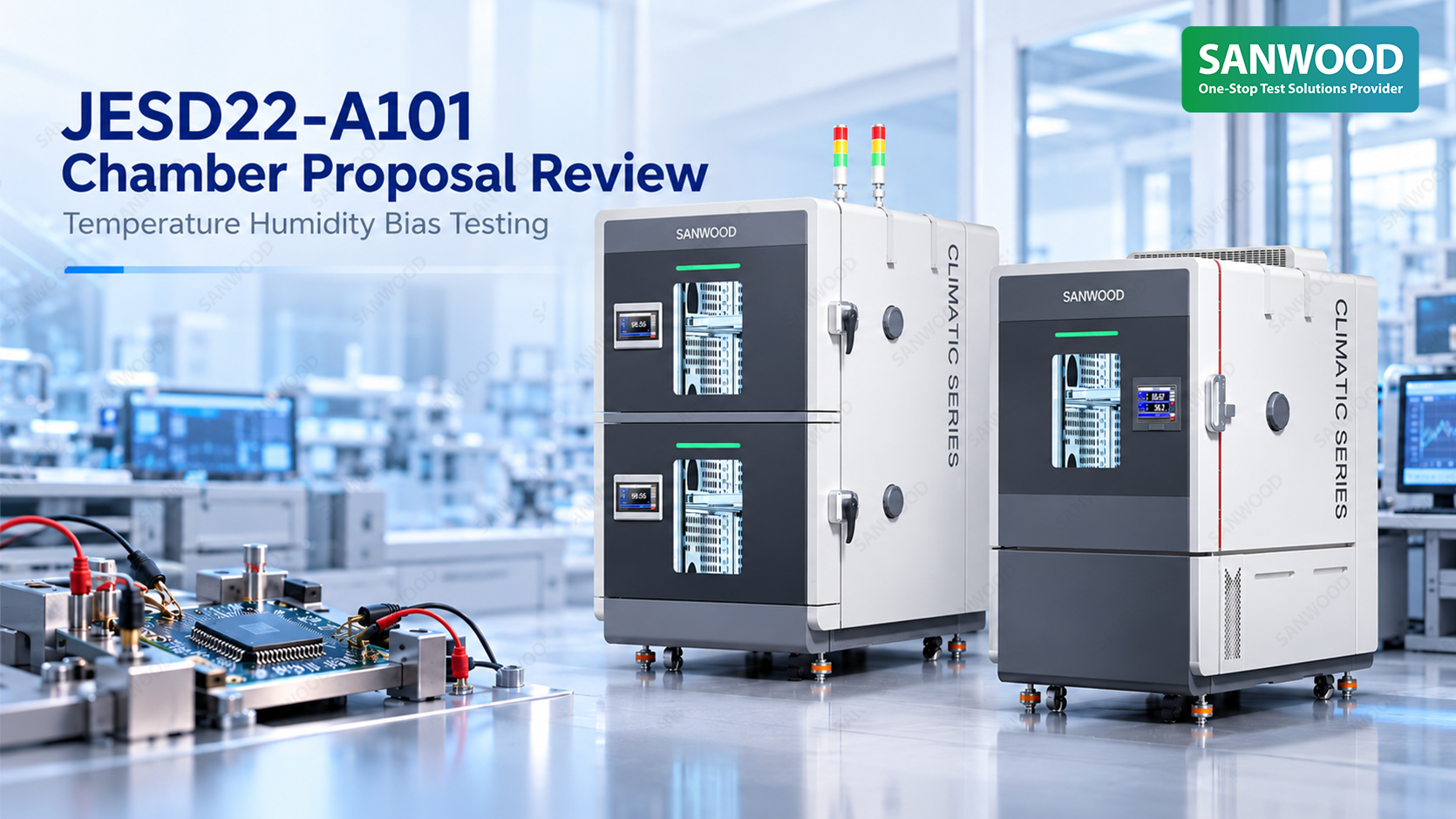
“85/85 THB” tells a supplier where the discussion starts, but not what will occupy the chamber or how the devices will be biased. The laboratory's plan should name the adopted JESD22-A101 revision, temperature and relative humidity, exposure schedule, DUT count, fixture layout, electrical requirements and acceptance criteria. That plan gives both sides a specific test against which to review the proposal.
If the test method has not yet been selected, start with the THB and HAST comparison. The review below assumes THB is already specified.
The SANWOOD standard-temperature humidity test chamber excerpt supplied for this review lists four temperature options. It helps screen a proposal, but does not identify the unit being quoted:
<>
| Configuration | Listed temperature range |
| A | 0°C to +180°C |
| B | −20°C to +180°C |
| C | −40°C to +180°C |
| D | −70°C to +180°C |
The excerpt also lists 10.0%–98.0% RH, with its 10% RH lower endpoint specified at 60°C and above. It does not show a complete temperature–humidity operating map. In particular, the endpoints do not establish the laboratory's required combined condition with its fixture and powered DUTs installed.
The quotation should identify the offered option and include its applicable parameter sheet. A single-compartment unit and a two-level unit should be reviewed as distinct configurations; for the latter, check what is specified for each compartment. Any proposed loaded-condition assessment should address the actual arrangement in the laboratory's plan.
The fixture, rather than the DUT alone, often sets the space requirement. Share its drawing or installed dimensions, board or socket layout, supports and cable route. The same review should include known heat dissipation from powered DUTs and any spacing or material constraint in the test plan. Empty-chamber dimensions cannot settle the loaded layout.
Then trace the bias path from the source to the DUT. State the needed channel count and device-specific voltage and current requirements. The proposal should say who supplies the source, chamber access or feedthrough, internal cables, fixture connections and measurement equipment. If an interface is offered, its drawing and itemized scope matter more than a general reference to a cable opening.
A chamber controller and external bias equipment may keep separate logs. The qualification team needs to know which system will record the environment, which will record bias and DUT measurements, and how those records will be tied to the same exposure. A shared data system should appear in the offer if the project requires one.
Five points are worth settling in the quotation:
<>
| Review item | Information to request | Decision to resolve |
| Governing test | Adopted JESD22-A101 revision, specified condition, duration and project acceptance criteria | Which requirements apply to this project? |
| Chamber configuration | Exact offered configuration and its applicable parameter sheet | Which listed parameters belong to the offer? |
| Installed arrangement | DUT count, fixture drawing, powered heat load and loaded-condition assessment | What arrangement has been assessed? |
| Electrical path | Bias-channel requirements, supply scope and drawing for any offered interface | Who provides each connection to the DUT? |
| Records | Environmental, bias and DUT record sources and their run identification | How will the records be related to the exposure? |
Mark each item as included in the offer, supplied by the laboratory or still open. An open item should stay visible in the quotation; the standard parameter excerpt cannot settle the scope of the bias supply, feedthrough, fixture or data system.
Possibly. Its installed dimensions, cable route and electrical connections need to fit the proposed chamber. Previous use in another setup does not establish that compatibility.
The published temperature and humidity ranges do not answer this. The quotation should name the bias equipment supplied by each party and any chamber interface or internal connection included in the offer.
That depends on the proposed configuration. Review the environmental condition, fixture space, electrical path and records for each intended compartment. The two-level form alone does not establish simultaneous test capability or an included bias system.
For an RFQ, send the adopted test plan, required temperature–humidity condition, fixture drawing, DUT count, bias requirements, known powered heat load and the equipment already available in the laboratory. Include the records the qualification team expects to review.
Use the SANWOOD temperature humidity test chamber range to begin the discussion. The written proposal should identify the offered configuration, the supply boundary and the documents available to assess that specific setup.
Sanwood is not just a company; it is a commitment to delivering high-quality products that stand the test of time.

 English
 中 文


 info@sanwood.com